Saturday, August 5, 2023

For Christ and the Church

 Praise for the Lord #156

Words: Eliza E. Hewitt, 1890
Music: William J. Kirkpatrick, 1890


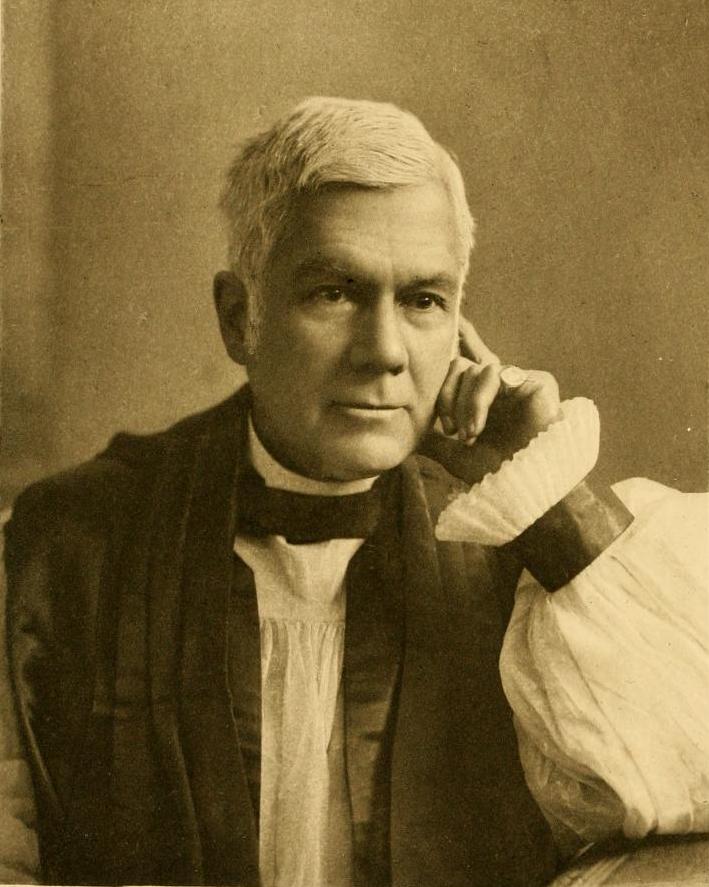
Eliza Edmunds Hewitt
photo from Cyber Hymnal
The May 1923 celebration of "Music Week" in Harrisburg, Pennsylvania must have been an amazing time--churches, schools, factories, and clubs went all out to put on programs, three different bands played an hour each in one night, and a mass choir concert directed by famed music educator Hollis Dann exclusively featured music by Pennsylvania composers. Newspaper coverage also mentioned several Pennsylvania notables in sacred music to be featured, including James McGranahan, Philip P. Bliss, Elisha A. Hoffman, Robert Lowry--and Miss E. E. Hewitt, the only woman composer mentioned ("State supervisor"). Though Eliza E. Hewitt did not attain the degree or longevity of fame as her friend Fanny J. Crosby, she was a highly prolific lyricist and sometime composer who was recognized as a major figure in gospel music of her era. Some of her songs have lasted through the decades, such as "More about Jesus," "There is sunshine in my soul today," "Stepping in the light," "A blessing in prayer," and the perennial "When we all get to heaven." A. J. Showalter wrote in 1904 that Hewitt was "the author of more popular hymns for gospel songs and Sunday School use than any other one writer except Fanny J. Crosby" (Showalter 280). Based on a rough tabulation from Hymnary.org, this was true at the time (James Rowe's prolific career was just beginning), and Hewitt still holds a solid third place for number of gospel song lyrics written.

Eliza Edmunds Hewitt (1851-1920) was born in Philadelphia to James and Zeruiah Hewitt of Cape May, New Jersey ("Eliza Edmunds Hewitt"). Her middle and last names link her to the old Colonial families of Cape May, possibly even to Mayflower Pilgrims (cf. Howe). James S. Hewitt was a sea captain, successful enough eventually to own an eponymous schooner ("Marine miscellany"), and saw his children go into learned professions in the Philadelphia area. George Ayres Hewitt, the oldest, graduated from Jefferson Medical College and was a regular contributor to medical journals ("George Ayres Hewitt, M.D."); younger brother Luther Edmunds Hewitt was the librarian of the City Hall Law Library (Gopsill's 2573); and Eliza Edmunds Hewitt was a public school teacher before an debilitating injury changed the course of her life.

Lyons Public School in 1912
Eliza Hewitt was admitted to the Girl's High and Normal School in 1865 (Annual Report 47(1865):225), and graduated with distinction in 1868 having just turned seventeen ("Girls' Normal School"). By 1871 she was the second assistant teacher at Girls School No. 6 (Annual Report 53(1871):132). From 1873-1878 she taught at Girls School No. 3 near Catharine & 10th streets (later the Lyons Public School), beginning as a third assistant and then as second assistant in 1875 (Annual Report 55(1873):132, 56(1874):125, 57(1875):152, 59(1877):144, 60(1878):111). She does not appear in the Philadelphia Public Schools Annual Report of 1879 or thereafter.

Biographers during her lifetime were not very specific about the injury that ended her public school career; Showalter says only that she was forced to resign by illness (280), and J. H. Hall specifies "serious spinal trouble" that forced her to resign and made her a shut-in for "a number of years" (345). It was not until 2003 that more details came to light: Dan Graves, writing about Hewitt for Christianity Today, was contacted by C. Edmunds Rhoad (grandson of Eliza's brother Luther) who revealed that Eliza was injured by a "reckless student striking her with a piece of slate" (Graves). Whether this was a student's writing slate or a loose slate from a roof is unclear, as well as the circumstances under which this happened.

As has been the case with a number of other hymnwriters, it seems that this forced retirement from public activity focused Hewitt's mind on devotional poetry. Hewitt had one hymn published already, in the words-only Hymns for Christian Worship (Cincinnati: Bosworth, Chase & Hall, 1871). But during her convalescence in the 1880s she began to show her prodigious ability in producing lyrics, and to make the connections that would get them set to music. Hewitt was becoming well known in Philadelphia Presbyterian circles; according to Hall, one of her hymns was placed in the cornerstone of the new Tabernacle Presbyterian Church in West Philadelphia, built in 1884 (Hall 345; Tabernacle United Church). John R. Sweney, choir director of Bethany Presbyterian in Philadelphia and music director for the popular religious encampment in Ocean Grove, New Jersey (Eskew), read some of Hewitt's lyrics and asked for more that he could set to music (Hall 345). Among the first of her lyrics widely published was "More about Jesus," set to music by Sweney; the invalid former teacher had written a song that was on the lips of Sunday School children across the country, and would go on to be her most widely-known contribution to gospel song.

Infant Praises (Philadelphia: John J. Hood, 1887)
Sweney (1837-1899) and his partner William J. Kirkpatrick (1838-1921) had begun editing songbooks for the John J. Hood Company in Philadelphia around 1880, and over the next two decades the pair would produce more than a hundred sacred music publications. During the period of collaboration with Kirkpatrick and Sweney, from 1887 to Sweney's death in 1899, Hewitt saw 819 new songs introduced in 109 different books. Of these songs, 421 were published in songbooks by by John J. Hood, all but a handful of which were edited by Sweney and/or Kirkpatrick. The next most prominent publisher of Hewitt's works in this period, by comparison, was the Hall-Mack Company (also of Philadelphia) with 48 new songs. William J. Kirkpatrick composed the music for 281 of these 819 new songs, and John R. Sweney composed for 213, bringing their total to 60% of all Hewitt's new songs from this period. The next most prolific composer for Hewitt's texts in this era was Adam Geibel with only 27 settings.

The information available on gospel music publishers from this era is frustratingly uneven; but in my estimation from WorldCat holdings, John J. Hood was second only to Biglow & Main of New York in the 1880s and 1890s. And just as Biglow & Main kept the ever-prolific Fanny Crosby on retainer, Sweney & Kirkpatrick had found their muse in Eliza Edmunds Hewitt. Of the 1,881 songs by Hewitt listed on Hymnary.org,  I can identify the composer for 1,573; out of these, 369 were set to music by Kirkpatrick and 244 by Sweney. Together they wrote the music for 40% of her songs for which a composer can be identified. A full 433 of Hewitt's songs, about 23% of the total, were first published by John J. Hood. Following Sweney's death John J. Hood greatly reduced its offerings of gospel music books, but by that time Hewitt's popularity among composers and publishers was firmly established.

There would naturally be some ebb and flow in the publication of new songs, depending on external factors such as the length of time from writing the lyrics to being set to music and the timing of publication on the part of the publisher. Looking at Hewitt's output of new songs from 1887 through 1923 (when the last significant cluster of new texts appears, three years posthumously), the mean number was 50 songs per year and the median was 47. Breaking this down into different periods, however, the true range of her output becomes apparent. From 1887 through 1893, the mean and median are again 50 and 47 per year; but from 1894 through 1901, Hewitt's numbers skyrocket to a mean of 81 songs a year and a median of 90. Along with this increase in output was an increase in the number of different composers setting Hewitt's texts each year, which went from a mean average of 6 in 1887-1893 to 23.5 in 1894-1901. There was a corresponding change in the number of publishers Hewitt's songs appeared with each year, which averaged only 4 from 1887 through 1893 but averaged 10 different publishers each year in 1894-1901. This shows that even though Hewitt's relationship with John J. Hood and the Sweney-Kirkpatrick editorship was a huge part of her work in the 1890s, she was also gaining popularity with other composers and publishers, and was thus unfazed (professionally at least) by the loss of Sweney and the departure of John J. Hood from the gospel music field.


The chart above also shows that while Hewitt's number of different publishers, books, and composers for her new material held steady throughout the rest of her career, her overall output decreased significantly during the first four years of the new century. Ironically, this may have been related to her improved health; her old injury no longer kept her home and at her writing desk, and she devoted much of her time to the Sunday School department at Olivet Presbyterian Church (Showalter 280), and later at the Calvin Presbyterian Church (Gabriel 13). At one time she had charge of as many as 200 pupils (Hall 346), though certainly not without assistance! The rapid growth of Calvin Presbyterian from its beginnings at a tent revival in 1902 to a large, established congregation by 1904 corresponds with Hewitt's decrease in songwriting. The congregation has been described as "the outgrowth of a Sunday School" (Presbyterian Historical Society), and Hewitt was becoming directly involved with teaching and organizing in addition to writing songs and curriculum. She continued to lead the primary department as late as 1916 (Gabriel 13).

Something caused Hewitt's songwriting to increase again in the middle 1910s--whether she had more time to spend on it, or there was greater demand for her songs, is uncertain. The volume of publishing by Hall & Mack in Philadelphia remained strong during this decade, and Hewitt's songs were now also sought by a younger generation of gospel publishers such as Charles H. Gabriel and Homer Rodeheaver. The year 1917 saw the publication of 94 new songs by Eliza Hewitt, her biggest year since 1900 and sixth-highest yearly total. The following year shows a rapid falling off of writing, probably a result of declining health prior to her passing in 1920.

Hewitt's public profile was never as great as that of Fanny Crosby, but she was certainly among the top handful of gospel song lyricists of the 19th-early 20th centuries. Her output of songs shows a growth from the early association with John J. Hood and the Sweney-Kirkpatrick editorship to engagement with a broad range of songwriters and publishers across the country, including significant collaborations with the Fillmore Brothers in Cincinnati and a number of contributions to the Southern Methodist songbooks published in Nashville by Rigdon McIntosh. It would be no exaggeration to call her the "Fanny Crosby" of the Philadelphia gospel songbook business, and Crosby spoke of her as an esteemed friend and peer:
Miss Eliza E. Hewitt, who has written many beautiful hymns and poems for Mr. Kirkpatrick and other composers, several years ago called on me while I was in Philadelphia; and her visit was indeed a gracious benediction. At Assembly Park, New York, recently we renewed the friendship then so favorably begun; and there we spent many delightful hours in conversation about subjects dear to both of us (Crosby 199).

From Hymnary.org
"For Christ and the church" first appeared in 1890 in two different publications: Living Hymns, edited by John Wanamaker with John R. Sweney, published by John J. Hood of Philadelphia, and Crowning Glory no. 2, edited by Peter Bilhorn and issued from his press in Chicago. I have not found any evidence which one appeared first. It was reprinted 16 more times by the end of the 1890s, returning in later works from John J. Hood and Peter Bilhorn, but also turning up in  Ira Sankey's Christian Endeavor Hymns (Biglow & Main), as well as in works by the Fillmore Brothers, Edwin O. Excell, and the then-fledgling Hope Publishing Company. During the 20th century the song faded away along with many others from the Northeastern gospel/Sunday school tradition, and it does not seem to have taken root in the Southern gospel world, at least in the paperback shape-note books. It did, however, settle into the regular hymnals of some religious fellowships, particularly the Church of the Brethren, Mennonites, and the Churches of Christ ("For Christ and the Church." Hymnary.org). Among the Churches of Christ in this country the song is unusual in that it was a northern Gospel song that was not included in Great Songs of the Church, but instead appears to have made entry by way of L. O. Sanderson's Christian Hymns no. 2 (Nashville: Gospel Advocate, 1948). These ubiquitous little tan books (sometimes blue) that filled the pew racks during the postwar boom in church growth had a huge influence across the southern U.S. and probably spread the song to the Slaters (The Crown, 1949) and Firm Foundation (Majestic Hymnal, 1959). How Sanderson came by the song is unknown, but it was in the Christian Church songbooks as far back as the Praise Hymnal (Fillmore Bros., 1896) and had recently appeared in Standard Publishing's Favorite Hymns no. 2 (1942).

Stanza 1:

For Christ and the Church let our voices ring,
Let us honor the name of our own blessed King;
Let us work with a will in the strength of youth,
And loyally stand for the kingdom of truth.

There used to be signs outside of many small towns across the United States that advertised the locations and meeting times of various religious bodies, with an underlying text "Attend the Church of Your Choice." No doubt this was more practical than a string of individual signs (like the old Burma-Shave ads), and I heartily appreciate the sentiment that I may attend the church of my choice--as opposed to a state church, or a list of government-approved churches. But there also seemed to be an underlying message that although church attendance was socially desirable, it didn't really matter much where you joined up. Through the years I have encountered people who profess a belief in God and put their faith in Christ as Savior, but don't believe in what one friend called "organized religion" (to which I should have said, paraphrasing Will Rogers, "I am not a member of any organized religion; I attend the Church of Christ.") Another coworker once expressed his view that he and the Lord "had an understanding," which apparently excused a lot of behavior that my own less enlightened upbringing would not have tolerated. I suspect a number of things lie behind such sentiments. In the first case, my friend may have disillusioned by the behavior of church members or leadership. In the latter case, there may have been more of a desire not to be accountable to anyone else in his walk with Christ, or to simply feel reassured that his spiritual condition was fine and did not require attention.

The crisis of the COVID-19 pandemic forced a lot of painful decisions about church gatherings, and as an elder in my congregation (at the time) I was in the middle of them. Given the vulnerable health of many of our members, and our location in the middle of a major metropolitan area where cases were rapidly multiplying, we opted to hold online services only for a period of time. But we had to get back together in person--no question about it, it was just a matter of when. Just as people had to go back to their jobs at some point for physical life to go on, it was clear that the church had to assemble together again for spiritual life to go on. So as carefully as we could, waving across a "buffer pew" between us and sometimes shouting to be understood from behind masks, we came together again. It was a time that really caused one to reflect on the church and its role in the Christian life. What part does it play in my life? What part do I play in it?

These questions probably would have sounded odd to Eliza Hewitt. Alexis de Tocqueville had noted earlier in the 19th century that,

Americans of all ages, all conditions, and all dispositions, constantly form associations. They have not only commercial and manufacturing companies, in which all take part, but associations of a thousand other kinds--religious, moral, serious, futile, extensive, or restricted, enormous or diminutive. The Americans make associations to give entertainments, to found establishments for education, to build inns, to construct churches, to diffuse books, to send missionaries to the antipodes ; and in this manner they found hospitals, prisons, and schools. If it be proposed to advance some truth, or to foster some feeling by the encouragement of a great example, they form a society (2:114).

This importance of clubs, associations, and other kinds of organizations was still very strong through Hewitt's time, and in fact down through the middle of the 20th century. An American simply took it as a given that a major part of life was participation in the community through clubs, societies, and of course through one's church. Does it need to be said that this is not who we are any more, at least for much of the population of the country? But the church still stands, whether our society embraces it or rejects it; and the questions above still stand. What have I to do with the church, and what does it have to do with me?

"And I tell you, you are Peter, and on this rock I will build My church, and the gates of hell shall not prevail against it" (Matthew 16:18).

In such momentous fashion we first encounter the word "church" (Greek ekklēsia) in the New Testament, from the lips of Christ himself. Whether Jesus actually spoke the Greek word ekklēsia in the moment or an equivalent Aramaic word, it was this term that Matthew, our eyewitness, uses in the inspired text. He had already used synagōgē seven times in his gospel, and the verb form synagō an additional seven times, in the general sense of "gathering" or "collecting" something; the choice of a  new and different word here emphasizes the newness of the concept (Porter 160). And for what it is worth, the extant Aramaic/Syriac versions of Matthew 16:18 use the term lˁēḏtā, which historically carried the notion of a group called as witnesses ("ˁdh, ˁdtˀ," Comprehensive Aramaic Lexicon), and not the usual Aramaic term for synagogue (Payne-Smith, cf. 402, 218).

But what did His listeners hear in that word? The Liddell-Scott-Jones lexicon (1940 revision) defines it as an "assembly duly summoned, less general than [sullogos]." In the Greek cities, it was the assembly of citizens for civic business; by extension, in the Septuagint it was applied to the "congregation of Israel" as the nation called out by God (1:509). A quick Google search of sullogos shows that it is even today the Greek term for a professional association or or social club, such as a sullogos athlitikon (athletic club). Though ekklēsia could also refer to a general assembling of people, as it does in Acts 19:32 describing the rushing together of the citizens of Ephesus to protest Paul's preaching, even in that context the city clerk chides his fellow citizens for not being a "lawful" ekklēsia (Acts 19:39). Being part of an ekklēsia, then, was more serious than being part of some accidental gathering around a common interest or voluntary social organization. For the citizen of a Greek city it was a defining part of one's identity--one might have a lot in common with those in the same trade, or followers of the same philosophy, who were from other cities--but a fellow Athenian, or fellow Spartan, was practically family. Citizenship in the ekklēsia was a brotherhood and heritage, an obligation and a privilege. 

Which no doubt raised the question in the apostles' minds, what could Jesus mean by building His own new ekklēsia? Though He had been proclaiming the "kingdom of heaven," Jesus had already rejected the notion of becoming an earthly king (John 6:15, following events also recorded in Matthew 14). He maintained this to the end, telling Pilate, "My kingdom is not of this world" (John 18:36), but explaining further, "You say that I am a king. For this purpose I was born and for this purpose I have come into the world--to bear witness to the truth. Everyone who is of the truth listens to My voice" (John 18:37). Citizenship in Christ's kingdom is not something determined by ancestry or boundaries on a map; it is an ekklēsia made up of those who are called out of the "domain of darkness" (Colossians 1:13) by the foundational truth that Jesus Christ is the Son of God (Matthew 16:16). It is a "kingdom of truth," as Hewitt puts it in her opening stanza, an expression that is not found in Scripture but is certainly scriptural.

So it is "Christ and the church" or nothing at all; they cannot be taken separately. A church without Christ at its head--that is not in submission to His will--is a building suspended in air without a foundation, or even worse, a grotesquely animated body without a head (Ephesians 1:22). It may have impressive numbers and great works, but it would be better off reorganized as a social club or charitable foundation. And a Christian without the church is (somehow?) rejecting the the will of God who "added to their number day by day those who were being saved" (Acts 2:47), and is missing out on the called-out group of believers the Lord founded, "which is His body, the fullness of Him who fills all in all (Ephesians 1:23).

Chorus:

For Christ our dear Redeemer,
For Christ the crucified;
For the Church His blood hath purchased;
The Church, His holy bride.

In the chorus of this song, Hewitt rightly emphasizes Christ and His work first, because without Him the church would not and could not exist:

He is the image of the invisible God, the Firstborn of all creation. For by Him all things were created, in heaven and on earth, visible and invisible, whether thrones or dominions or rulers or authorities--all things were created through Him and for Him. And He is before all things, and in Him all things hold together. And He is the head of the body, the church. He is the beginning, the firstborn from the dead, that in everything He might be preeminent. For in Him all the fullness of God was pleased to dwell, and through Him to reconcile to himself all things, whether on earth or in heaven, making peace by the blood of His cross (Colossians 1:15-20).

It is not uncommon among the Churches of Christ to be reminded, especially among congregational leadership, to "remember whose name is on the sign outside." It is Christ's church, not mine, not yours, not the preacher's; and those who serve in roles of leadership must remember that we are just stewards and servants for a little while, who must someday report in to the "Chief Shepherd" (1 Peter 5:4). It is His church because He bought and paid for it at a price we cannot comprehend. He is the Head of the church, the will that directs it just as the brain in my head commands my fingers to type these words. 

The last line of the chorus introduces another curious metaphor of Christ and His church, based on Paul's words in Ephesians 5:25-32.

Husbands, love your wives, as Christ loved the church and gave himself up for her, that He might sanctify her, having cleansed her by the washing of water with the word, so that He might present the church to himself in splendor, without spot or wrinkle or any such thing, that she might be holy and without blemish. In the same way husbands should love their wives as their own bodies. He who loves his wife loves himself. For no one ever hated his own flesh, but nourishes and cherishes it, just as Christ does the church, because we are members of His body. "Therefore a man shall leave his father and mother and hold fast to his wife, and the two shall become one flesh." This mystery is profound, and I am saying that it refers to Christ and the church. 

Here the picture of Christ and the church as a Head and body is transformed to a different perspective;  so closely does Christ cherish and treasure His church that it is compared to the powerful, transformative union of husband and wife. We cannot help but see a foreshadowing here also of the words of the angel in Revelation 21:9, "Come, I will show you the Bride, the wife of the Lamb." With what respect and awe, then, ought we to treat the Bride of Christ? Now, I try to be tolerant and forgiving to everyone, but mistreat my wife and I am liable to become downright unreasonable. I can forgive a lot when it is directed toward me, but my wife is entirely another matter. I suppose most husbands feel the same. How dare we then to do any anything to mistreat or upset the Bride of Christ? Let us always show the respect to the church that its Head and Husband commands, and never do anything to harm it!

Stanza 2:

For Christ and the Church be our earnest pray’r,
Let us follow His banner, the cross daily bear;
Let us yield, wholly yield, to the gospel’s pow’r,
And serve faithfully ev’ry day, ev'ry hour.
(Chorus) 

In the 11th chapter of 2 Corinthians, Paul takes a few paragraphs to "speak as a fool" (v. 17), detailing some of his hardships--not for a "pity party" but to remind the readers of the genuineness of his calling and his commitment to the gospel. As an afterthought to the privations and punishments he had experienced, he adds in verse 28, "and, apart from other things, there is the daily pressure on me of my anxiety for all the churches." "Earnest prayer" for the church is evident throughout Paul's letters:

For God is my witness, whom I serve with my spirit in the gospel of His Son, that without ceasing I mention you always in my prayers, asking that somehow by God's will I may now at last succeed in coming to you (Romans 1:9-10).

But we pray to God that you may not do wrong--not that we may appear to have met the test, but that you may do what is right, though we may seem to have failed. For we cannot do anything against the truth, but only for the truth. For we are glad when we are weak and you are strong. Your restoration is what we pray for (2 Corinthians 13:7-9).

I thank my God in all my remembrance of you, always in every prayer of mine for you all making my prayer with joy, because of your partnership in the gospel from the first day until now (Philippians 1:3-5).

And so, from the day we heard, we have not ceased to pray for you, asking that you may be filled with the knowledge of His will in all spiritual wisdom and understanding (Colossians 1:9).

We give thanks to God always for all of you, constantly mentioning you in our prayers, remembering before our God and Father your work of faith and labor of love and steadfastness of hope in our Lord Jesus Christ (1 Thessalonians 1:2-3).

To this end we always pray for you, that our God may make you worthy of His calling and may fulfill every resolve for good and every work of faith by His power, so that the name of our Lord Jesus may be glorified in you, and you in Him, according to the grace of our God and the Lord Jesus Christ (2 Thessalonians 1:11-12).

How much stronger could the local church be, if every member were offering up such prayers on its behalf?

The next line of Hewitt's stanza brings up another turn of phrase intimately connected with Jesus' announcement of the church in Matthew 16:18--the requirement that His followers bear their crosses (Luke's account records this with the adverb "daily," 9:23). Familiarity has probably led us to miss how out-of-place this seemed in context, but the disciples didn't have that problem. Jesus had started out by stating His own purpose to go to Jerusalem where He would bear a cross to His death, and Peter could not accept that the Son of God who had just previewed the founding of His church would go to such an ignominious end. Jesus rebuked Peter sharply, then spoke these words that ring in every disciple's ears since: "If anyone would come after Me, let him deny himself and take up his cross and follow Me" (Mat 16:24).

What does it mean to bear that cross daily? Perhaps it will help us to understand first what it meant to Jesus, as recorded in the beautiful language of Philippians 2:

Have this mind among yourselves, which is yours in Christ Jesus, who, though He was in the form of God, did not count equality with God a thing to be grasped, but emptied himself, by taking the form of a servant, being born in the likeness of men. And being found in human form, He humbled himself by becoming obedient to the point of death, even death on a cross" (v. 5-8).

By bearing the cross to His death, Jesus would do (to an infinitely greater degree) what He required of His followers: He denied self. "Denying self" in this context is not some matter of refusing to partake of something we want; though that may be necessary in some particulars, Paul rejected mere asceticism on its own as "of no value in stopping the indulgence of the flesh" (Colossians 2:23). The denial spoken of here is the same language used of Peter in Matthew 26:70, "But he denied it, saying "I do not know the Man." Jesus was "in the form of God" but gave up His former condition of "equality with God" (Philippians 2:6), effectively denying connection to His former state and saying "I do not know the Man." He was in a new relation to His Father and to humanity. In the same way (though such a pale comparison!), if I have "put off the old self, which belongs to your former manner of life" and have "put on the new self, created after the likeness of God in true righteousness and holiness" (Ephesians 4:22-24), I can say of my old self, "I do not know the man; I do not acknowledge his will, because I follow Christ now." Whatever cross He may call on me to bear, I can only take up by first kneeling under it in submission and acknowledging that I am no longer in charge here.

Now consider on the other hand what the cross does for us: it reconciles us to God and to fellow humanity (Ephesians 2:16); it takes away the debt of sin (Colossians 2:14); it makes peace (Colossians 1:20); "it is the power of God" (1 Corinthians 1:18). The "gospel's power" of which Hewitt speaks in this stanza began at the cross, as Jesus promised: "And I, when I am lifted up from the earth, will draw all people to myself" (John 12:32). Christ's church helps to carry out this wonderful mission, "not with words of eloquent wisdom, lest the cross of Christ be emptied of its power" (1 Corinthians 1:17), but through "Christ crucified" (1 Corinthians 1:23). It is the honor and duty of the church to carry this cross to the world, so that "through the church the manifold wisdom of God might now be made known," even "to the rulers and authorities in the heavenly places" (Ephesians 3:10)

Stanza 3:

For Christ and the Church willing offerings make,
Time and talents and gold for the dear Master’s sake;
We will render the best we can bring to Him,
The heart’s wealth of love, that will never grow dim.
(Chorus)

This stanza addresses the subject of giving in a well-considered, comprehensive way. People typically think of offerings as the weekly contribution to the church treasury, so it is notable that Hewitt puts "time and talents" before "gold."  In my experience those who give their time and talents to the Lord's service are also generous with their monetary contributions (if they are able), a phenomenon Paul pointed out long ago when he praised the Macedonian churches for their generosity: "they gave themselves first to the Lord and then by the will of God to us" (2 Corinthians 8:5). It is wonderful to see Christians who are well blessed in worldly goods and then dedicate those riches to the Lord, and I am glad to know some who hear of a brother or sister in financial difficulty and ask simply, "How much do they need?" But financial contributions alone are no substitute for the "time and talents" the church requires; money cannot buy sincere prayer and encouragement for the struggling, or the example and instruction of the mature Christian to the younger. Money cannot buy the listening ear or the honest criticism of someone who wants only the best for us. Money cannot buy someone to sit with us in the "Gethsemanes" of life. Who will do these things? (And don't say that's what you pay the preacher for!) We have all needed brothers and sisters like this, and conversely, there is someone in the church who needs me, and needs you, to be this brother or sister to them.

With that broader view of giving to the church in mind, Paul's great text on the subject from 2 Corinthians 9:6-12 takes on even deeper meaning:

The point is this: whoever sows sparingly will also reap sparingly, and whoever sows bountifully will also reap bountifully. Each one must give as he has decided in his heart, not reluctantly or under compulsion, for God loves a cheerful giver. And God is able to make all grace abound to you, so that having all sufficiency in all things at all times, you may abound in every good work. As it is written, "He has distributed freely, he has given to the poor; his righteousness endures forever." He who supplies seed to the sower and bread for food will supply and multiply your seed for sowing and increase the harvest of your righteousness. You will be enriched in every way to be generous in every way, which through us will produce thanksgiving to God. For the ministry of this service is not only supplying the needs of the saints but is also overflowing in many thanksgivings to God (2 Corinthians 9:6-12)

God promises that if we sincerely wish to give, He will provide us the means to do it. Surely that applies as much to giving our time and effort as to giving money. It is a personal decision, of course; just as we would be poor stewards if we gave our rent money in the collection plate, we would be poor stewards to commit our time and effort to the church beyond what we can manage. (And if you are raising children, or caring for elderly family members, God has already given you a large assignment!) But let us start first with the attitude of "What can I do?" and not "What do I have to do?"

Stanza 4:

For Christ and the Church let us cast aside,
By His conquering grace, chains of self, fear, and pride;
May our lives be enriched by an aim so grand;
Then happy the call to the Savior’s right hand.
(Chorus)

The final stanza of the song may be an oblique reference to Hebrews 12:1, but in more of a community sense than that of the individual: "Therefore, since we are surrounded by so great a cloud of witnesses, let us also lay aside every weight, and sin which clings so closely, and let us run with endurance the race that is set before us." What holds back the individual, of course, holds back the church. There are many things that can keep us in chains--"you are slaves of the one whom you obey, either of sin, which leads to death, or of obedience, which leads to righteousness" (Romans 6:16)--and thank God there is One stronger yet who came to "proclaim liberty to the captives" and "set at liberty those who are oppressed" (Luke 4:18, cf. Isaiah 61:1-2). But first, of course, we have to realize we are in chains! "Self" and "pride" are two of the most powerful shackles by which we can be imprisoned; as Isaac Watts noted, "Pride is one vice but it supports a hundred" (Humility 41). 

Pride in the church works in many ugly ways. Those in positions of public prominence who become puffed up by the members' praise and start "believing their own press" can develop a complacency about their work, a hostility to necessary criticism, and most dangerously, a blind spot toward their own faults and weaknesses. These individuals can become easy pickings for the Devil, and sometimes give him the satisfaction of wrecking an entire congregation as well. But pride can also haunt people who are not in such positions and think they should be. Bitterness can set in and stop them from even accomplishing those works which are right in front of them and begging for their talents. Their downfall is not as dramatic or as fast as the first group, but for very little effort on his part the Devil has effectively neutralized their usefulness to Christ's church.

The problem of pride is so critical that Paul addressed it multiple times, twice using the metaphor of the human body to illustrate the spiritual body of Christ:

For by the grace given to me I say to everyone among you not to think of himself more highly than he ought to think, but to think with sober judgment, each according to the measure of faith that God has assigned. For as in one body we have many members, and the members do not all have the same function, so we, though many, are one body in Christ, and individually members one of another (Romans 12:3-5).

For the body does not consist of one member but of many. If the foot should say, "Because I am not a hand, I do not belong to the body," that would not make it any less a part of the body. And if the ear should say, "Because I am not an eye, I do not belong to the body," that would not make it any less a part of the body. If the whole body were an eye, where would be the sense of hearing? If the whole body were an ear, where would be the sense of smell? But as it is, God arranged the members in the body, each one of them, as he chose (1 Corinthians 12:14-18).

Note the transition in the Romans passage from "thinking with sober judgment" about our place in the church, to the metaphor of the body. It is human nature to compare ourselves with others; but if we truly have different functions, as do the parts of the body, how relevant will that comparison be? Which is more important, a hand or a foot? We probably consider a hand more important because we can do so many things with it, whereas the lowly foot can only do a few things. But those few things include standing and walking! If you have ever had a broken toe, you know just how much we depend on all those little parts in the foot (which we take for granted) to do their jobs every day. Remember that the Head of the church himself took the role of the lowliest servant to wash the feet of His own followers, and never doubt the value of every role in the church.

These passages also have the common theme of God's hand in this sorting out of roles: this is something He "assigns" and "arranges," even though it is not always apparent to us what He is doing. It takes time to find our roles, or to grow into them, and sometimes they will change. Like everything else in the Christian life, it requires patience and humility.

I therefore, a prisoner for the Lord, urge you to walk in a manner worthy of the calling to which you have been called, with all humility and gentleness, with patience, bearing with one another in love, eager to maintain the unity of the Spirit in the bond of peace (Ephesians 4:1-2).

Being a church of Christ isn't easy, and it's not what people often think. It isn't a group of people who  are always in agreement, bubbling over with joy in each other's company and so spiritually elevated that they are floating a little off the ground. But most of the really important and satisfying things in life aren't easy.  Is marriage easy? Is raising children easy? Even at their best, these parts of life are hard work, because they involve other people, and dealing with people (even people we love the most) sometimes means frustration, tears, and a lot of apologizing and trying again. But God placed us in the church for a reason, and He knows best. In His wisdom He decided that we would have to get through this together, the weak and the strong, the mature and the novices, the introverts and the extroverts. None of us is so strong that we can go it alone; none of us is so weak that we cannot help someone else. 

About the music:

My attempt to summarize William Kirkpatrick's career for this post finally grew so complicated that I decided to treat him in a separate essay; for now I have just a few observations about the music he contributed to this particular text. The style is that of a march, but a marching song such as Kirkpatrick would have known from his Civil War days, rather than the modern American march genre as it was being redefined by John Philip Sousa and others. "For Christ and the church" is actually contemporary with Sousa's classics Washington Post and High School Cadets, but sounds more like such wartime marching songs as George Frederick Root's "Battle Cry of Freedom" and "Tramp! Tramp! Tramp! the Boys are Marching" (which survives today as "Jesus Loves the Little Children"). 

Not that Kirkpatrick was necessarily old-fashioned; the American instrumental march style was developing its own personality, with a characteristic swagger and bravura that did not lend itself to sacred topics. But perhaps some of that spirit comes through in this tune after all, with the dramatic octave leap at the end of the second measure and the sudden pause at the end of the second phrase, as though gathering energy for the next surge forward. It is meant to excite, and one can only imagine how well received it was in its time, when it was still new and very much within the musical styles familiar to congregations. It sings easily even today, and has a forward motion that tends to keep the beat moving as if under its own power.


References

Annual Report [of the School District of Philadelphia]). Philadelphia: Board of Education, 1818- . https://catalog.hathitrust.org/Record/100575840/Home

The Comprehensive Aramaic Lexicon. Hebrew Union College. https://cal.huc.edu/

Crosby, Fanny. Memories of Eighty Years. Boston: James H. Earle, 1906.  https://archive.org/details/cu31924022206878/

Edmunds, Franklin Davenport, 1874-1948, photographer. The Lyons Public School. 8/7/1912. Glass plate negatives. Free Library of Philadelphia: Philadelphia, PA.  Accessed 24 March 2023. https://libwww.freelibrary.org/digital/item/8163 

"Eliza Edmunds Hewitt." Familysearch.com person page.  https://www.familysearch.org/tree/person/details/KLJK-TRN

Eskew, Harry, and Mel R. Wilhoit. "Sweney, John R(obson)." The Grove Dictionary of American Music. Oxford Reference. Date accessed 26 March 2023.

"For Christ and the Church." Hymnary.org.  https://hymnary.org/text/for_christ_and_the_church_let_our_voices

Gabriel, Charles H. Gospel Songs and Their Writers. Chicago: Rodeheaver, 1915.  https://catalog.hathitrust.org/Record/008407138

“George Ayres Hewitt, M.D.” Obituary in The Medical Bulletin (Philadelphia) XXVII:8 (August 1905), page 304.

"Girls' Normal School." Evening Telegraph (Philadelphia), 3 July 1868, page 8.

Gopsill's Philadelphia City Directory for 1900. Philadelphia: James Gopsill's Sons, 1900. 

Graves, Dan. "Eliza Edmunds Hewitt: songs from a bed of pain." Christianity.com. Last updated July 2007. https://www.christianity.com/church/church-history/timeline/1801-1900/eliza-edmunds-hewitt-songs-from-a-bed-of-pain-11630486.html

Hall, J. H. Biography of Gospel Song and Hymn Writers. New York: Fleming H. Revell, 1914. https://archive.org/details/biographyofgospe00hall

Howe, Paul Sturtevant. Mayflower pilgrim descendants in Cape May County, New Jersey. Cape May, NJ: A. R. Hand, 1921.

Liddell, Henry George, Robert Scott, and Henry Stuart Jones. A Greek-English Lexicon. Oxford: Clarendon Press, 1940. https://archive.org/details/b31364949_0001 

"Marine Miscellany." Philadelphia Inquirer, 10 October 1877, page 6.

Payne Smith, Jessie. A Compendious Syriac Dictionary. Oxford: Clarendon Press, 1903.  https://archive.org/details/ACompendiousSyriacDictionary

Porter, Stanley E. The Criteria for Authenticity in Historical-Jesus Research: Previous Discussion and New Proposals. Journal for the Study of the New Testament: Supplement Series 191. Sheffield: Sheffield Academic Press, 2000.

Presbyterian Historical Society. "1902: Calvin Presbyterian Church, Philadelphia, PA." https://www.history.pcusa.org/blog/2012/07/1902-calvin-presbyterian-church-philadelphia-pa

Showalter, A. J. The Best Gospel Songs and Their Composers. Dalton, Ga.: A. J. Showalter Co., 1904. https://archive.org/details/bestgospelsongst00show/

"State supervisor of music to direct community sing." The Evening News (Harrisburg, Pennsylvania), 1 May 1923, page 17.

Tabernacle United Church. "History." https://tabunited.org/about/history/

Tocqueville, Alexis de. Democracy in America, translated by Henry Reeve. New York: Colonial Press, 1900. https://archive.org/details/democracyin02tocq/ 

Vincent, Marvin R. Word Studies in the New Testament. Grand Rapids, Michigan: Eerdmans, 1948.

Watts, Isaac. Humility Represented in the Character of St. Paul. London: R. Hart, 1737.

Tuesday, January 31, 2023

For All the Saints

Praise for the Lord #155

Words: William Walsham How, 1864
Music: SINE NOMINE, Ralph Vaughan Williams, 1906

Bishop How, c. 1870
Obviously, William Walsham How (1823-1897) was a gifted and energetic man. By the age of 24 he had graduated Wadham College, Oxford with an M.A. in classics, completed theological studies at Durham University, and had served as a deacon, curate, and been ordained a priest in the Church of England. No doubt he could have done many things and gone many other places, but he also had that admirable trait of committing his talents to service where he felt he was needed, rather than using them for his personal advancement. Family responsibilities called him back to his native Shropshire, and this rising young star served for the next 28 years as the rector of Whittington. Not to say that he was buried in obscurity; he became well known, in fact, for his books of sermons and devotionals, and as a writer and lecturer on practical pastoral work. He turned down several opportunities for more prestigious appointments over the years; it was only the opportunity to be of greater service that drew him away. In 1879 he became the Bishop of Bedford, a suffragan (sort of an assistant) bishop to the Bishop of London, with particular responsibility for the impoverished East End. It became a "crusade" to him, in the description of an associate, and How was unparalleled in his fund-raising for benevolent projects. In his years in London he became known as "the children's Bishop" for his commitment to youth programs, and was appointed to a royal commission on working-class housing. Following the death of his wife in 1887, and finding increasing disagreements with the new Bishop of London, How accepted the position of Bishop of Wakefield, a Yorkshire industrial town, where he continued his ministry to the poor and working classes (Overton & Curthoys).

William Walsham How wrote around seventy-five hymn texts, many of which continued in use for decades, and a handful of which remain in wide use today. According to Hymnary.org his most widely published text is "O Jesus, Thou art standing", found in 632 hymnals, including 21st-century examples such as the Baptist Hymnal. Other well known hymns by How, in addition to "For all the Saints", are "O Word of God incarnate" (PFTL #503) and "We give Thee but Thine own" (PFTL #724). In all of these we can see the truth of John Julian's assessment of William Walsham How's hymn-writing: "Those compositions which have laid the firmest hold upon the Church, are simple, unadorned, but enthusiastically practical hymns” (I:540). 

Julian's opinion echoes the thoughts of How's fellow bishop William Boyd Carpenter, who contributed the essay "Bishop Walsham How as a hymn-writer" to Bishop Walsham How: A Memoir (pages 411-417). Boyd Carpenter's thoughts on good hymn-writing are worthwhile far beyond the insight they give to the individual's hymns who prompted them:

The great poet is not necessarily a good hymn-writer. This will be apparent to any one who studies our collections of hymns. Two things will strike such a student. He will find that among the hymn-writers there are few men of first-class literary rank. He will further find that the most popular hymns are not from the pens of these few. In other words, the highest poetic gift does not ensure the power of writing a good hymn. Less gifted men succeed where men of higher endowments fail (F. D. How 412).

This reminds me of a conversation with Dr. John Parker of Lipscomb University, as he was beginning work on what would become his lovely book Abide with Me: A Photographic Journey Through Great British Hymns (New Leaf Press, 2009). As a professor of English literature he was frankly surprised at how little overlap he found between the "greats" of English literature and the "greats" of English hymn-writers; for example, Isaac Watts's foundational role in English hymnody is hardly matched by his reputation in English literature in general. (Perhaps the best known reference to Watts in the latter context is in fact poking fun at him, when Lewis Carroll has Alice misquote "How doth the little busy bee" as "How doth the little crocodile"!) And on the other hand, where are the hymns of Milton, or Donne, or Bunyan, great spiritual writers though they were in other genres? We have some fine hymns adapted from the literary greats ("Dear Lord and Father of mankind" from Whittier, for example), but they tend to be the exception. Boyd Carpenter wisely continues, however:

On the other hand, it would be a mistake to infer that success in hymn-writing needs no literary qualities. There have been cases in which men of little or no cultivated literary capacity have produced an admirable hymn; but an examination of our hymn-books will show that the bulk of our best hymns have been the work of devout men who have possessed natural poetic feeling and a cultivated taste (412).

The trick is, from Boyd Carpenter's perspective, to bring these things into balance: "Next to true devotional feeling, good sense is the first requisite of a good hymn. There are other requisites, no doubt, but eccentricity is the ruin of a hymn" (412). The congregation that sings a hymn will often consist of several well-read people but many others with only minimal exposure to or interest in literature, just as it will consist of children (physical and spiritual) and elders (physical and spiritual). The difficult task of a hymn-writer is to reach them all with something worthwhile that they can use to worship God. A thorough knowledge of and skill in literary composition gives the writer the range and depth to communicate; good sense makes sure it is used for the right purpose, rather than to show off the author's skill. This dedication to service is well summed up by Boyd Carpenter, and is high praise to his friend William Walsham How:

It is the fate of a hymn-writer to be forgotten. Of the millions who Sunday after Sunday sing hymns in our churches, not more than a few hundreds know or consider whose words they are singing. The hymn remains: the name of the writer passes away. Bishop Walsham How was prepared for this; his ambition was not to be remembered, but to be helpful. He gave free liberty to any to make use of his hymns. It was enough for him if he could enlarge the thanksgivings of the Church or minister by song to the souls of men. There will be few to doubt that his unselfish wish will be fulfilled (416).

"For all the saints" first appeared in a small collection titled Hymn for Saints’ Day and Other Hymns, published by Earl Nelson in 1864, and then (as Julian put it) "in nearly every hymnal of importance published in Great Britain" and "in the best collections of all English-speaking countries" (I:380). It is a hymn for All Saints' Day, celebrated in the Western calendar on November 1st (or by some on the first Sunday in November). Despite its original association with the veneration of saints, many Protestant groups retained the hymn as a memorial to departed Christians in general, and one could easily see this hymn used at a Homecoming Sunday, New Year's Service, or even at a funeral service. It is a topic not much addressed in our hymnals, and deserves to be used.


Stanza 1:

For all the saints, who from their labors rest,
Who Thee by faith before the world confessed,
Thy Name, O Jesus, be forever blessed.
Alleluia, Alleluia!

In the today's world the "saints" that come to most people's minds are those who are formally recognized by a religious tradition for an exceptional life of holiness and service. Admirable though many of these people are for their examples and contributions, however, this obscures the "ordinariness" of the Biblical use of the term. After all, Paul called the Christians in Corinth "saints" before proceeding to take them to the woodshed over their multiple and egregious errors! An important clue to New Testament usage of this word, in fact, is woven into Paul's opening statement of the letter:

To the church of God that is in Corinth, to those sanctified in Christ Jesus, called to be saints together with all those who in every place call upon the name of our Lord Jesus Christ, both their Lord and ours (1 Corinthians 1:2). 

They are not saints by virtue of their superior holiness or service; they are "called to be saints," and not they alone, but "all those . . . in every place" who "call upon the name of our Lord Jesus Christ." They are "sanctified" (made saints), then, not by their own lives or by popular acclaim, but "in Christ Jesus." The passive voice of the phrases "sanctified in Christ Jesus" and "called to be saints" ought not to be missed, for "the holiness derives from Christ" (Kittell 1:107).

Even so, this status of being cleansed from sin and set apart for God's service ought to inspire us to such a life of holiness and service that would be worth remembering when we are gone. "To be a saint is not directly and primarily to be good but to be set apart by God as His own, yet the godly and holy character ought inevitably and immediately to result" (Estes). And certainly there is nothing wrong with remembering those saints who have set this kind of example: "Remember your leaders, those who spoke to you the word of God. Consider the outcome of their way of life, and imitate their faith" (Hebrews 13:7). 

In the opening stanza of this hymn, then, we are offering our thanks to the Lord for those saints who have gone before us. They confessed Jesus before the world, making the "good confession" of belief in Jesus Christ as the Son of God and Savior (1 Timothy 6:14). The King James Version gives this as "good profession", and that is what it became (in the modern sense of the word) for these saints--their calling and purpose in life. This daily confession, by word and deed, was rooted in faith in the One confessed: "Let us hold fast the confession of our hope without wavering, for He who promised is faithful" (Hebrews 10:23). He was faithful to them in this life, and promises to be faithful in the world to come, saying, "Therefore whoever confesses Me before men, him I will also confess before My Father who is in heaven" (Matthew 10:32). 

These faithful saints who have passed on also enjoy the great reward of rest, a true rest that this world cannot offer: 

Here is a call for the endurance of the saints, those who keep the commandments of God and their faith in Jesus. And I heard a voice from heaven saying, "Write this: Blessed are the dead who die in the Lord from now on." "Blessed indeed," says the Spirit, "that they may rest from their labors, for their deeds follow them!" (Revelation 14:12-13)

In light of these things we can take heart, "always abounding in the work of the Lord, knowing that in the Lord your labor is not in vain" (1 Corinthians 15:58).

Stanza 2:

Thou wast their Rock, their Fortress and their Might;
Thou, Lord, their Captain in the well fought fight;
Thou, in the darkness drear, their one true Light.
Alleluia, Alleluia!

Though this hymn is an expression of thanksgiving and appreciation for the saints who preceded us, it is addressed to the Lord through whom they gained their victory. As one of the most famous of these saints said, "Be imitators of me, as I am of Christ" (1 Corinthians 11:1); and through this life lived in dependence on and in imitation of Christ, Paul was assured of that "crown of righteousness" at the end (2 Timothy 4:8). 

William How describes the saints' reliance on Jesus using a number of metaphors from Biblical sources. The first line appears to paraphrase the opening of the lyric in 2 Samuel 22 (duplicated with minor differences as Psalm 18), which David wrote in thanksgiving for the recent victories that had secured his kingship: 

The LORD is my rock and my fortress and my deliverer, my God, my rock, in whom I take refuge, my shield, and the horn of my salvation, my stronghold and my refuge, my savior; You save me from violence" (2 Samuel 22:2-3).

There is a reference to the same ideas in Psalm 61:1-3, though in a less triumphant tone:

Hear my cry, O God, listen to my prayer; from the end of the earth I call to You when my heart is faint. Lead me to the rock that is higher than I, for You have been my refuge, a strong tower against the enemy.

Roman-era fort in the Judean Desert
(Heritage Conservation Outside
The City Pikiwiki Israel)
Perhaps David had in mind the "Rock of Escape" (1 Samuel 23:28), a hideout in the Judean Desert where he had evaded King Saul. These rocky badlands provide multiple hiding places and routes for attack and retreat, but most of all they provide natural defensive battlements. It is probably this aspect that called for comparison to our God; man-made walls can be undermined or breached, but these rock fortresses are still in place 2,000-plus years later and would still serve that purpose quite well.

In the New Testament, Jesus concludes the Sermon on the Mount with a memorable parable about the stability of rock and the instability of sand (a fact well known to his listeners, who were well familiar with flash flooding and erosion). Though the reference is to His words, rather than to himself or His Father, the meaning is the same: what is your "life founded upon? The saints whose memory is honored knew this: Everyone then who hears these words of mine and does them will be like a wise man who built his house on the rock. And the rain fell, and the floods came, and the winds blew and beat on that house, but it did not fall, because it had been founded on the rock" (Matthew 7:24-25).

The next line of this stanza compares Jesus to the Captain of an army, a metaphor also founded in Scripture. To begin with, in the King James Version Hebrews 2:10 refers to Him as "the Captain of [our] salvation." More modern translations render this as "Author", "Founder", or "Pioneer", which rightly bring out the original word's fuller meaning of a leader who blazes the way ahead of his followers; "He is the leader of all others who tread that path" (Vine 80). If we use the metaphor of a military captain to describe Him, we ought to remember that Jesus is not safely behind the lines at headquarters; like the ancient Roman centurion, He is at the head of His troops going into battle.

Though His kingdom is "not of this world" (John 18:36), and we "do not wrestle against flesh and blood" (Ephesians 6:12), the followers of Jesus have a battle to fight. Paul, who grew up in a Roman city and became personally acquainted with a number of soldiers in his lifetime, used the military metaphor often. The "well-fought fight" is the consuming purpose of the Christian life, and requires our utmost. Only near the end was Paul able to look back and say, "I have fought the good fight, I have finished the race, I have kept the faith" (2 Timothy 4:7). The stanza closes with a picture of these fighting, struggling saints pressing on through the darkness toward the light. "This present darkness" through which they fought and we still fight (Ephesians 6:12) seems overpowering, but we are assured that "the darkness is passing away and the true light is already shining" (1 John 2:8). We can overcome the darkness if we keep our focus on that undying Light. "So then let us cast off the works of darkness and put on the armor of light" (Romans 13:12).

Stanza 3:

O may Thy soldiers, faithful, true and bold,
Fight as the saints who nobly fought of old,
And win with them the victor’s crown of gold.
Alleluia, Alleluia!

How's lyric turns now to us, the soldiers still in the field, who draw encouragement from those who have gone before. As Paul fought his own "good fight," so we are to "Fight the good fight of the faith. Take hold of the eternal life to which you were called and about which you made the good confession in the presence of many witnesses" (1 Timothy 6:12). It is awe-inspiring to think of being a fellow soldier with men such as Paul, but he frequently called his co-workers in the church by these terms (Philippians 2:25, Philemon 2).

Paul also calls us to consider our responsibilities as Christians in comparison to those of earthly soldiers. Soldiers are expected to be fully committed to their mission, to the exclusion of other matters. "No soldier gets entangled in civilian pursuits, since his aim is to please the one who enlisted him" (2 Timothy 2:4). The armed forces of the U.S. rely heavily today on Reserves and the National Guard, members of which pursue their civilian occupations with occasional training periods; but when they are deployed to active duty they leave these things behind and become full-time soldiers. Christians in a sense are always on active duty, and need to focus on the mission. We do not know how long our own fight will be, or what the gains and losses will look like in the individual moment. But like the saints who went before us, we need to keep our minds on the fight, and not get bogged down with things that will hinder our service:

Since therefore Christ suffered in the flesh, arm yourselves with the same way of thinking, for whoever has suffered in the flesh has ceased from sin, so as to live for the rest of the time in the flesh no longer for human passions but for the will of God (1 Peter 4:1-2).

Part of the ongoing duty of soldiers is to make sure all their necessary equipment is prepared for action. I am reminded of a somewhat humorous item in the news several years ago, a photograph depicting a U.S. soldier in a combat zone who was attired in his helmet, boots, a T-shirt, flak jacket, and a pair of shorts emblazoned with "I [heart] NY". In his defense, he was off duty and had stripped down to take a nap in the shade, seeking relief from the desert heat; but when the position came under attack he put on his armor, took up his weapon, and ran to his position in the defenses. Even in a half-awake state he would not let himself become separated from his most essential pieces of equipment for fighting and survival on the battlefield. Paul tells Christians also to wake up and get our armor on: 

Besides this you know the time, that the hour has come for you to wake from sleep. For salvation is nearer to us now than when we first believed. The night is far gone; the day is at hand. So then let us cast off the works of darkness and put on the armor of light (Romans 13:11-12).

Therefore take up the whole armor of God, that you may be able to withstand in the evil day, and having done all, to stand firm (Ephesians 6:13).

The saints who went before us also remind us that there is an end to this spiritual fight someday, a day we will be released from this service and called up to a more joyful purpose. The victory is guaranteed:

But thanks be to God, who gives us the victory through our Lord Jesus Christ. Therefore, my beloved brothers, be steadfast, immovable, always abounding in the work of the Lord, knowing that in the Lord your labor is not in vain (1 Corinthians 15:57-58).

For everyone who has been born of God overcomes the world. And this is the victory that has overcome the world--our faith (1 John 5:4).

And at the end there is "the crown of life, which God has promised to those who love him" (James 1:12).

Roman-era laurel. Photo by Georges Jansoone.

The next three stanzas from How's original text are usually omitted, but add an interesting backdrop to the key ideas in the hymn: 

For the Apostles’ glorious company,
Who bearing forth the Cross o’er land and sea,
Shook all the mighty world, we sing to Thee:
Alleluia, Alleluia!

For the Evangelists, by whose blest word,
Like fourfold streams, the garden of the Lord,
Is fair and fruitful, be Thy Name adored.
Alleluia, Alleluia!

For Martyrs, who with rapture kindled eye,
Saw the bright crown descending from the sky,
And seeing, grasped it, Thee we glorify.
Alleluia, Alleluia!

These have a strong similarity to the opening section of the ancient "Te Deum" prayer, even borrowing the phrasing "glorious company of the Apostles": 

We praise Thee, O God; we acknowledge Thee to be the Lord.
All the earth doth worship Thee, the Father everlasting.
To Thee all Angels cry aloud, the Heavens, and all the Powers therein.
To Thee Cherubin and Seraphin continually do cry,
Holy, Holy, Holy, Lord God of Sabaoth;
Heaven and earth are full of the Majesty of Thy glory.
The glorious company of the Apostles praise Thee.
The goodly fellowship of the Prophets praise Thee.
The noble army of Martyrs praise Thee.
The holy Church throughout all the world doth acknowledge Thee;
The Father, of an infinite Majesty;
Thine honourable, true and only Son;
Also the Holy Ghost, the Comforter.

(Traditionally this was believed to be an inspired joint composition by Ambrose and Augustine on the occasion of the latter's baptism in 387 A.D., though modern scholarship has found circumstantial evidence pointing toward the 4th-century bishop Nicetas of Remesiana (Bela Palanka, Serbia). Hugh T. Henry, however, pointed out more than a century ago that there are strong parallels in a text by Cyprian of Carthage from 252 A.D. (Henry).)

How's stanza says the apostles "shook all the mighty world" with their message, perhaps referencing Haggai's prophecy of the Messiah who would shake things up: "For thus says the LORD of hosts: 'Yet once more, in a little while, I will shake the heavens and the earth and the sea and the dry land. And I will shake all nations . . ." (Haggai 2:6-7a). The Apostles continued His work so well that they also certainly "shook the world"; Paul's enemies in Thessalonica described them as "These men who have turned the world upside down" (Acts 17:6). And for this, Paul remarks to the church in Corinth, 

We have become a spectacle to the world, to angels, and to men. We are fools for Christ's sake, but you are wise in Christ. We are weak, but you are strong. You are held in honor, but we in disrepute. To the present hour we hunger and thirst, we are poorly dressed and buffeted and homeless, and we labor, working with our own hands. When reviled, we bless; when persecuted, we endure; when slandered, we entreat. We have become, and are still, like the scum of the world, the refuse of all things (1 Cor 4:9b-13).

To which I can only respond in the words of the author of Hebrews, speaking of the prophets of old: "Of whom the world was not worthy!" (Hebrews 11:38). Thanks be to God for these men of courage and faith, who saw the church firmly planted across the accessible world of their day.

We can also be thankful for the four Evangelists, the writers of the gospel accounts of the life of Jesus. Matthew, the outcast from his people who yet wrote the most Jewish of all the accounts, presenting the evidence from the Hebrew Testament that Jesus is the promised Messiah; Mark, the well-traveled man of the world (and perhaps the recorder for Peter), who writes with such energy and focus that his account is still perhaps the most accessible place to start for the secular reader; Luke, the well-educated Greek physician, who recorded in clinical detail things that defied the scientific worldview of his day (and ours); and John, who contemplates the cosmic sweep of all that Christ is, interlaced with touching personal memories of the Man he knew so well. Together they give us a portrait of Christ that bursts with dimension, texture, and color.

The third stanza of this section based on the Te Deum remembers the martyrs for Christ, a subject addressed very directly in the Revelation:

When he opened the fifth seal, I saw under the altar the souls of those who had been slain for the word of God and for the witness they had borne. They cried out with a loud voice, "O Sovereign Lord, holy and true, how long before You will judge and avenge our blood on those who dwell on the earth?" Then they were each given a white robe and told to rest a little longer, until the number of their fellow servants and their brothers should be complete, who were to be killed as they themselves had been (Revelation 6:9-11).

This was important to John's readers because it was entirely possible these could be someone they knew. From what we know by history and tradition, all of the apostles save John met with violent deaths. Persecution on a mass scale had already taken place during the reign of Nero (see the Annals of Tacitus, book 15 section 44), and a similar pattern would follow Christianity in the decades to come. They were a convenient scapegoat whenever required, and what politician doesn't need one from time to time? And as the Roman Empire continued to hollow out and fray, enforced patriotism became all the more important to its leaders, making the Christians' unswerving loyalty to their own King look suspicious.

If only the world had changed! There are countries today where Christians are a despised underclass, easily set up as the culprits whenever an outlet for social unrest is needed. There are totalitarian governments today for whom loyalty to anything higher than the state is considered seditious. God only knows how many have been added to the ranks of the martyrs even in this young century; and God forbid that we in the U.S. should consider ourselves persecuted because we are facing some headwinds from a secularized culture that was never that genuinely Christian to start with. A contemplation of the real courage of martyrs, both ancient and modern, ought to shake us from complacency and cause us to give thanks for their examples. 

The next stanza is omitted in Praise for the Lord, though it is usually retained in other hymnals.

O blest communion, fellowship divine!
We feebly struggle, they in glory shine;
Yet all are one in Thee, for all are Thine.
Alleluia, Alleluia!

This stanza reminds us that even in contemplation of such famous and exalted spiritual company as the apostles, evangelists, and martyrs, the ground is level at the foot of the cross; we are a fellowship of believers. Consider the numerous times that Paul, the great apostle to the Gentiles, spoke of someone as his "fellow worker" or "fellow soldier". Or hear the words of John in his first epistle: "That which we have seen and heard we proclaim also to you, so that you too may have fellowship with us; and indeed our fellowship is with the Father and with his Son Jesus Christ" (1 John 1:3). Perhaps the most dramatic instance of this equality of fellowship is demonstrated in the closing chapter of John's Revelation, when the apostle himself is struck with awe at being in the company of a mighty angel:

I, John, am the one who heard and saw these things. And when I heard and saw them, I fell down to worship at the feet of the angel who showed them to me, but he said to me, "You must not do that! I am a fellow servant with you and your brothers the prophets, and with those who keep the words of this book. Worship God" (Revelation 22:8-9).

What an encouraging thought, that even the angelic beings in God's presence invite us to stand and worship alongside them as fellow creations!

Stanza 4:

And when the strife is fierce, the warfare long,
Steals on the ear the distant triumph song,
And hearts are brave again, and arms are strong.
Alleluia, Alleluia!

The U.S. Navy has a tradition of naming the destroyer class of vessels after its heroes, and many of the names could be chapter headings in the history of that institution: John Paul Jones. Decatur. Farragut. Dewey and Gridley. Halsey and Spruance. These names are kept in remembrance in honor of those individuals, but also for the sake of those currently serving--from Jones's "I intend to go in harm's way" to Farragut's "Full speed ahead!" (preceded by a dismissive remark about torpedoes), their words and actions encapsulate the values of the service.

The writer of Hebrews gave us a similar list of heroes in the 11th chapter of that treatise, followed by the exhortation, 

Therefore, since we are surrounded by so great a cloud of witnesses, let us also lay aside every weight, and sin which clings so closely, and let us run with endurance the race that is set before us, looking to Jesus, the founder and perfecter of our faith, who for the joy that was set before him endured the cross, despising the shame, and is seated at the right hand of the throne of God (Hebrews 12:1-2).

These are names worth remembering, the writer says: Abel. Enoch. Noah. Abraham and Sarah. And to these we can add the heroes, both famous and ordinary, of the New Testament; but also we can take courage from the saints we have known personally, whose examples have touched our lives directly and continue to inspire us. It is one of the "features" of middle age, I suppose, that more and more people I have loved are now gone from this life. But I remember their faces, their smiles, their words of encouragement, their patient and steady examples of Christian manhood or womanhood. I could begin listing them, but I don't know how or when I could stop. Suffice it to say, I think of one and remember his optimism and energy in spite of his loneliness in later years; I think of another and remember her gentleness and desire to see the best in people; I think of yet another and remember his humility and sweetness in a world that treated him poorly for so long. I remember them, and am ashamed of my own complaints, and am encouraged again to take up my part in the labors they carried forward so well. 

The next two stanzas, depicting the current and future state of the departed saints, are omitted in Praise for the Lord. 

The golden evening brightens in the west;
Soon, soon to faithful warriors comes their rest;
Sweet is the calm of paradise the blessed.
Alleluia, Alleluia!

"Blessed are the dead who die in the Lord from now on; blessed indeed, that they may rest from their labors, for their deeds follow them!" (Revelation14:13). It was with this courage and satisfaction that Paul faced his approaching death, saying "there is laid up for me the crown of righteousness, which the Lord, the righteous judge, will award to me on that day" (2 Timothy 4:8), concluding that "the Lord will rescue me from every evil deed and bring me safely into His heavenly kingdom" (2 Timothy 4:18). As the author of Hebrews argued, "there remains a Sabbath rest for the people of God, for whoever has entered God's rest has also rested from his works as God did from His" (Hebrews 4:9-10). 

This is the current state of the departed saints, now in paradise awaiting the end of all things; but the next stanza begins How's depiction of the amazing climax of history, when Jesus returns in His glory. 

But lo! there breaks a yet more glorious day;
The saints triumphant rise in bright array;
The King of glory passes on His way.
Alleluia, Alleluia!

The phrase "King of Glory" is found in an unusual passage that makes up the second half of the 24th Psalm: 

Lift up your heads, O gates!
And be lifted up, O ancient doors,
that the King of glory may come in.

Who is this King of glory?
The LORD, strong and mighty,
the LORD, mighty in battle!

Lift up your heads, O gates!
And lift them up, O ancient doors,
that the King of glory may come in. 

Who is this King of glory?
The LORD of hosts,
He is the King of glory!
(Psalm 24:7-10)

The psalm portrays a festive processional in which the approaching throng calls for the gates of a city to open up for the King; the gatekeepers (presumably) ask the identity of the King, and the throng gives answer. Some have suggested that this originated with, or was in reenactment of, David's transportation of the Ark of the Covenant to Jerusalem (Eaton 126). In that case, a symbol of God's presence was brought into a tabernacle that symbolized God's dwelling among His people, in a city that symbolized God's sovereignty over them. In the final triumphal entry of the Jesus, surrounded by His people, will enter in the gates of "the city that is to come" (Hebrews 13:14) and into the presence of the Father himself . 

Stanza 5:
From earth’s wide bounds, from ocean’s farthest coast,
Through gates of pearl streams in the countless host,
Singing to Father, Son and Holy Ghost:
Alleluia, Alleluia!

The final stanza captures the grand sweep of this procession, portraying the faithful from all nations and all eras in a final culmination of that promise to Abraham, "and in your offspring shall all the nations of the earth be blessed" (Genesis 22:18) and extended throughout the ages of the prophets:

I saw in the night visions, and behold, with the clouds of heaven there came one like a Son of Man, and He came to the Ancient of Days and was presented before Him. And to Him was given dominion and glory and a kingdom, that all peoples, nations, and languages should serve Him; His dominion is an everlasting dominion, which shall not pass away, and His kingdom one that shall not be destroyed (Daniel 7:13-14).

Now we see in the mind's eye that fulfillment that John saw by his vision: 

After this I looked, and behold, a great multitude that no one could number, from every nation, from all tribes and peoples and languages, standing before the throne and before the Lamb, clothed in white robes, with palm branches in their hands (Rev 7:9).

May we remember the great legacy of faithfulness left to us by those saints who have gone before, and may we take courage from them to continue in the path they took, knowing that we too can be part of this glorious company.

About the music:

"For all the saints" was associated with the tune SARUM by Joseph Barnby as early as the 1870s, and according to Hymnary.org actually edges out the instances of SINE NOMINE in their database. The Ralph Vaughn Williams tune (the title of which simply means "without a name") first appeared in the 1906 English Hymnal, one of the most influential English-language hymnals of the 20th century. How Ralph Vaughan Williams, an atheist (or at most an agnostic) came to edit music for a hymnal, and thus to contribute this tune, is a story of converging religious, cultural, and political trends that may only have been possible in that time and place.

Vaughan Williams ca. 1910
Vaughan Williams began work on the English Hymnal in 1904 at a time when he was just beginning to make his mark as a composer; it was during this period that his iconic Songs of Travel were premiered, when he first completed In the Fen Country and Toward the Unknown Region, and was beginning work on the Sea Symphony. He had worked as a church organist, and was becoming known as a choral composer and festival organizer. But most importantly, he had met famed folklorist Cecil Sharp (1859-1924) and joined his efforts through the Folk Song Society to record the oral traditions of folk music throughout rural England (Day 272ff.). Vaughan Williams's love for folk music (along with his fascination with the choral music of the Tudor era) helped create his distinct style, and inform most of the compositions for which he is remembered today.

It was Cecil Sharp, in fact, who recommended Vaughan Williams to Percy Dearmer (1867-1936) when the London vicar was looking for a music editor for a new hymnal. Vaughan Williams later said that he had heard of Dearmer as "a parson who invited tramps to sleep in his drawing-room" but was surprised that he was approached about the work. He protested to Dearmer that he really knew very little about hymns (probably a major understatement even then), but was convinced to take on the task when he was given to understand that, as he put it, "if I did not do the job it would be offered to a well-known church musician with whose musical ideas I was very much out of sympathy" (Vaughan Williams "Reminiscences" 115).

Vaughan Williams actually had some rather specific ideas about church music, even if he was not as familiar with the hymn tunes at the beginning. He generally shared Dearmer's socialist views, and as Katie Heathman has pointed out, "Vaughan Williams's atheism did not prevent him from embracing the Church as the type of corporate body and its music as the kind of communal expression that he believed would be vital in shaping this new society" (190). Vaughan Williams saw in the English Hymnal an opportunity to share great music with audiences that would rarely enter a concert hall (Heathman 186). In his finely crafted arrangements of the folk songs he had collected, as well as selections from the great hymn tunes of the past (with an emphasis on the neglected works of pre-Victorian English composers), he aimed to create "a thesaurus of all the finest hymn tunes in the world." Even so, on occasion the need to find another tune for an unusual meter such as "For all the saints" meant that Vaughan Williams sometimes, "contrary to my principles, contributed a few tunes of my own, but with becoming modesty I attributed them to my old friend, Mr Anon" (Vaughan Williams "Reminiscences"116).

The character of SINE NOMINE is that of the processional, as though the final stanza was in Vaughan Williams's mind: "Through gates of pearl streams in the countless host." The melody is solemn and dignified yet has a restrained energy, a quality well cultivated by British composers for the various ceremonies of state. (Consider the famous "Land of hope and glory" section from Edward Elgar's Pomp and Circumstance Marches No. 1, known in the U.S. from countless repetitions at graduation exercises; or William Walton's Crown Imperial, written for the coronation of the late Queen Elizabeth II.) In the case of this hymn tune, however, the royal procession is not a select few, but the body of Christ as a whole, "from earth’s wide bounds, from ocean’s farthest coast." As Aaron Copland's Fanfare for the Common Man celebrated the ordinary laborer, SINE NOMINE honors not only the famous saints of old but those unknown (sine nomine?) hosts of the faithful who served God's purpose in their day and passed from the scenes of this life without fanfare. 

Those who have studied or performed much of Vaughan Williams's music have likely noticed the recurring melodic ideas that he favored, even using them in multiple different works. James Day notes that the opening four-note motive of SINE NOMINE, as well as the final two "Alleluia" phrases, turn up frequently in his other compositions (264). The "Alleluia" section is referenced almost verbatim, for example, in the Benedictus section of his Mass in G Minor from 1921, an acapella work for double chorus written in Vaughan Williams's unique modern interpretation of English Renaissance church music (Day 129). Even more interesting is the use of the opening phrase of SINE NOMINE. This melodic idea first turned up in "Love's last gift", the final song of the cycle House of Life from 1903; it appears again in Toward the Unknown Region at the words "Then we burst forth," starting the final triumphant section of this setting of Walt Whitman's "Darest thou now, O soul" (Kennedy 114). It is also prominent in his Fifth Symphony of 1943, which also borrowed heavily from his still-in-development operatic setting of Pilgrim's Progress (Day 204ff). The combination of these elements led Kennedy to label this the "Symphony of the Celestial City" (283). Certainly this musical idea often came to mind when Vaughan Williams was writing of a final triumph over a long struggle; it "runs through Vaughan Williams's music at times of relation or release" (Kennedy 113-114), and is "a key-motive for expressing jubilation throughout Vaughan Williams's life" (Kennedy 85).

 
References: 

Day, James. Vaughan Williams. Oxford University Press, 1998.

Eaton, John H., et al. The Psalms : A Historical and Spiritual Commentary with an Introduction and New Translation, London: Bloomsbury Publishing, 2003.

Estes, David Foster. "Saints." International Standard Bible Encyclopedia. Grand Rapids: Eerdmans, 1939. https://www.internationalstandardbible.com/S/saints.html

Heathman, Katie Palmer. "Lift up a living nation: community and nation, socialism and religion in The English Hymnal, 1906." Cultural and Social History 14:2, 183-200.

Henry, Hugh. "Te Deum." Catholic Encyclopedia. New York: Robert Appleton Company, 1912.  http://www.newadvent.org/cathen/14468c.htm

How, Frederick Douglas. Bishop Walsham How: a Memoir. London: Isbister and Co., 1898. https://archive.org/details/bishopwalshamhow00howf 

Julian, John. A Dictionary of Hymnology. New York: Dover Publications, 1957.

Kennedy, Michael. The Works of Ralph Vaughan Williams. New edition. London: Oxford University Press, 1980.

Kittel, Gerhard, et al. Theological Dictionary of the New Testament. Grand Rapids: Eerdmans, 1964. 

Overton, J. H., and M. C. Curthoys. "How, William Walsham (1823–1897), bishop of Wakefield." Oxford Dictionary of National Biography.  Oxford University Press, date of access 4 December 2022. https://www-oxforddnb-com/ref:odnb/13882

Vaughan Williams, Ralph. "Preface to the English Hymnal," Vaughan Williams on Music, edited by David Manning. Oxford University Press, 2007, 31-37.

Vaughan Williams, Ralph. “Some reminiscences of the English Hymnal,” Vaughan Williams on Music, edited by David Manning. Oxford University Press, 2007, 115-118.

Vine, W. E., et al. The expanded Vine's expository dictionary of New Testament words. Minneapolis: Bethany House, 1984. 

Saturday, December 3, 2022

Give Me the Bible

 Praise for the Lord #154

Words: Priscilla J. Owens, 1883
Music: Edmund S. Lorenz, 1883

Priscilla Jane Owens (1829-1907) is best remembered today for her songs "We have heard the joyful sound (Jesus saves!)" and "Will your anchor hold?", both set to stirring music by William J. Kirkpatrick and published in 1882. These are remarkably successful examples of gospel song and hold up well (as does the song under consideration here), but her name has otherwise faded from memory. It is worthwhile to note, then, that an editorial in a Methodist journal in 1911 mentioned “Priscilla J. Owens, Mrs. Joseph F. Knapp, Josephine Pollard, and Fannie Crosby” as examples of notable women hymnists ("Let us sing"). Mrs. Knapp is Phoebe Knapp, better known as the composer of Fanny Crosby's "Blessed assurance", and Josephine Pollard was a nationally known children's author as well as a hymnwriter. By comparison to Crosby, of course, Owens wrote "only" 200+ lyrics; but this was never the focus of her very full life of community and church service.

P.S. 10 at Hollins & Schroeder, from an 1869 map
Priscilla Owens was born and raised in Baltimore, the daughter of Isaac Owens, a commercial merchant on the old Dugan's Wharf (Matchett's 1851 205). He was prosperous enough to provide her an education at the Patapsco Institute, followed by secondary education at the Ladies' Collegiate Institute (Perine 206), and eventually the family moved into the more fashionable environs of Lombard Street and the Union Square district. Priscilla never married, instead pursuing a career in the public schools, where she served for an impressive half-century. Her first appointment, in the 1852/53 school year, was as an assistant teacher at Female Primary School No. 9 (Ordinances 1853 243). She must have made an impression; within three years she was moved up to fill a vacancy for principal at Male Primary School No. 7 (Twenty-Seventh Annual Report 27). She remained ten years, then took over as principal at Male Primary School No. 10, where she and three assistants taught 199 boys (Thirty-Seventh Annual Report 172). Owens was still principal there in 1880 (Woods' Baltimore City Directory 1880 1139), but that fall was reassigned as an assistant teacher at Female Primary School No. 8 ("Sitzung" 7 July 1880). She was only 51, so this seems an early retirement, but she had already been a principal for 25 years. She may have wanted a less demanding position that allowed more time for her growing Sunday School work; another possibility is that the school board wanted to use Owens as a mentor to younger teachers. As late as 1880 she was serving as an assistant teacher to a group of schools ("Sitzung" 7 July 1880).

Priscilla Owens's gospel song career began with a bang in 1871, when composer and publisher Asa Hull published no fewer than 34 of her lyrics in a single book. Though his name has faded from the modern repertoire, William Reynolds placed Hull alongside William Bradbury, George F. Root, William H. Doane, and Robert Lowry as founders of the Sunday school gospel song (104), and Benson narrows it further, speaking of "Sunday school songs of the Hull and Bradbury school" (484). Though they were based in different cities, Hull and Owens likely knew each other--or of each other--though their work in the Methodist Sunday school organizations. Asa Hull's works found in WorldCat show that he was publishing Sunday school songbooks in Boston as early as 1862 and moved his operations to Philadelphia by 1865. His Casket of Sunday School Melodies (1865) was successful enough to warrant a supplemental issue, then was reissued in 1869 in a combined format. Though Hull generally issued a new book every year, his output slowed in the late 1860s. His 1871 offering, Sparkling Rubies, has the appearance of striking off in a new direction, and it is here that Priscilla Owens enters the picture:

In presenting "Sparkling Rubies" for public consideration and popular favor we feel called upon merely to state that much care has been exercised in the selection of hymns and the proper adaptation of the music to the same, as well as the appropriateness of the whole to the existing wants of the Sunday-School, which seem to be in the direction of new but sound evangelical hymns set to pure yet enthusiastic and inspiring music.

The several contributors whose names appear over their respective contributions are writers of experience and ability, and the editors feel under great obligations to them for their kind assistance as well as for their manifested interest in the success of the work.

They feel especially indebted to Miss Priscilla J. Owens for the great variety of excellent Hymns written expressly for this work, and bespeak for her contributions that generous appreciation on the part of the public, to which they are justly entitled (Sparkling Rubies preface).

Hull's assistant in this work, Harry Sanders, was a Baltimore musician and piano seller whose Sanders & Stayman Co. would become a mainstay of Baltimore musical life ("Fifth Avenue"). He also published a couple of small hymn collections through the Methodist Episcopal Book Room of that city, and sometimes led the singing for the Methodist Episcopal General Conference in Baltimore (Journal of the General Conference 1876 359), so he was likely well known to Priscilla Owens. Sanders wrote the music for the majority of Owens's songs in Sparkling Rubies (27 out of 34).

Owens's songs from Sparkling Rubies were reprinted in other Asa Hull publications during the 1870s, and a few new songs appeared during that decade, but it was not until the 1880s that Priscilla Owens produced another large body of works for a single publication. (Interestingly, this was when she moved to an assistant teacher position instead of being a principal; perhaps she had more time to focus on writing.) In 1880 two publications appeared that show her entering into a different orbit of gospel song publishing: Missionary Songs (New York: Lorenz & Co., 1880), edited by Edmund S. Lorenz, and The Quiver of Sacred Song (Philadelphia: John J. Hood, 1880), edited by John R. Sweney and William J. Kirkpatrick. Once again, the songs themselves were not lasting favorites, but it was the first time her lyrics came into the hands of the two composers who would set her most popular songs. William J. Kirkpatrick, who set to music "We have heard the joyful sound" and "Will your anchor hold?", would eventually be responsible for the music of 57 of Owens's 240+ hymns; Edmund Lorenz, who set "Give me the Bible", would write the music for 52 of them.

"Give me the Bible" first appeared in Holy Voices for the Sunday School (Dayton, Ohio: W. J. Shuey, 1883), edited by Edmund S. Lorenz and Isaiah Baltzell. This book contained 29 new songs by Priscilla Owens, and though she is not singled out in the preface, her contributions far outnumber those of any other author and the first song in the book is one of hers. The 1880s proved to be Owens's most productive period, averaging a dozen new songs published each year; but though her output fell to four or five each year in later years, new Priscilla Owens songs were still appearing even in the decade following her death. She also lived to see some of her most popular songs published in German, Spanish, Norwegian, and Swedish, and sung around the world.


From Himmelwaerts (Dayton, Ohio: Lorenz & Co., 1899). German-speaking churches
were common in the Midwestern U.S. during the late 19th century.


Now for the text itself.

Christians who hold the Bible as the only authoritative source of doctrine and practice, and who take a high view of inspiration, are sometimes accused of "Bibliolatry." It is certainly a problem to be taken seriously, because Jesus took it seriously. He had these chilling words for some of His listeners: "You search the Scriptures because you think that in them you have eternal life; and it is they that bear witness about Me, yet you refuse to come to Me that you may have life" (John 5:39-40). With the first-century Pharisees and with us today, it is all too possible to have a dedication to Scripture and yet completely miss the point. But sometimes that accusation is a reflection of a culture, even among some who sincerely wish to follow Jesus, that resists recognizing an authoritative standard. This is equally wrong, and the Bible--the only objective source we have, when all is said and done, for the teachings of Jesus and His followers--is clear that it is to be taken as such a standard or not at all.

Jesus himself taught a high view of the Scriptures. In His temptation in the wilderness, He famously countered Satan's arguments with Scripture, stating first that "Man shall not live by bread alone, but by every word that comes from the mouth of God" (Matthew 4:4). In this He acknowledged that 1) there is a Word that comes from the mouth of God--as Paul would later say, "breathed out by God" (2 Timothy 3:16)--and that 2) that Word is just as important to spiritual life as bread is to physical life. Jesus said that Scripture cannot be broken (John 10:35), that the Word is truth (John 17:17), and that it alone will set us free (John 18:32). The Word spoken by Jesus is equally authoritative: "Heaven and earth will pass away, but My words will not pass away" (Matthew 24:35); it will make us clean (John 15:3) and will be spirit and life to us (John 6:63).

Jesus conferred the same authority to the Scriptures to be revealed through His chosen spokesmen, according to His promise to the apostles in John 16:

"I still have many things to say to you, but you cannot bear them now. When the Spirit of truth comes, He will guide you into all the truth, for He will not speak on His own authority, but whatever He hears He will speak, and He will declare to you the things that are to come. He will glorify Me, for He will take what is mine and declare it to you" (John 16:12-14).

Paul reflected on this in addressing the Christians in Thessalonica: "And we also thank God constantly for this, that when you received the word of God, which you heard from us, you accepted it not as the word of men but as what it really is, the word of God, which is at work in you believers" (1 Thessalonians 2:13). Peter echoed these thoughts in his first letter, equating the gospel he preached with the inspired word of God spoken of in Isaiah 40:6, when he said:

You have been born again, not of perishable seed but of imperishable, through the living and abiding word of God; for "All flesh is like grass and all its glory like the flower of grass. The grass withers, and the flower falls, but the word of the Lord remains forever." And this word is the good news that was preached to you (1 Peter 1:23-25).

Let us respect, love, and revere the Bible because of the One who gave it for our everlasting benefit. And for this reason, if we occasionally have a song that simply states this doctrine as a reminder of the importance of Scripture in our lives, no apology seems necessary.

Stanza 1:

Give me the Bible, star of gladness gleaming,
To cheer the wand'rer, lone and tempest-tossed;
No storm can hide that radiance peaceful beaming
Since Jesus came to seek and save the lost.

Printed below the title of this song in its first publication is the verse, "Your word is a lamp to my feet and a light to my path" (Psalm 119:105). Light as a metaphor for truth and righteousness, as well as for knowledge and wisdom, is found developed throughout the Scriptures. To this famous line from the great acrostic Psalm we may add the earlier Psalm 43, verse 3, "Send out Your light and Your truth; let them lead me; let them bring me to Your holy hill and to Your dwelling!" The Proverbs add a note of progression out of darkness as one follows this light: "The path of the righteous is like the light of dawn, which shines brighter and brighter until full day" (4:18). 

These thoughts are echoed by the New Testament writers, but pointing more specifically to the great Source of this light. Paul tells his readers that "God, who said, 'Let light shine out of darkness,' has shone in our hearts to give the light of the knowledge of the glory of God in the face of Jesus Christ" (2 Corinthians 4:6). Peter seems to echo the verse from Proverbs when he says, "We have the prophetic word more fully confirmed, to which you will do well to pay attention as to a lamp shining in a dark place, until the day dawns and the morning star rises in your hearts" (2 Peter 1:19). 

The "star of gladness gleaming" that guides the "wanderer, lone and tempest-tossed" first calls to mind the use of stars for navigation, fixed points that guided sailors to their destinations centuries before satellites and GPS. The stars don't lie; in fact, since the advent of electronic "GPS spoofing" the U.S. Navy has reinstated this skill requirement for officers. Spiritually speaking, the Bible is that fixed star that will always give us the true direction again no matter how confused our present course. But looking at the metaphorical (and actual) use of stars in Scripture, we might also consider how a star led three men to Jesus, and Peter's mention of the "morning star" that rises in our hearts. At the end of John's Revelation, Jesus declares himself "the bright morning star" (22:16); according to Peter, then, the word of God is a lesser light that guides us to the full glory of Jesus. 

The power of this lamp's light is the power of the One who lit it, and "no storm can hide" it--"the light shines in the darkness, and the darkness has not overcome it" (John 1:5). The promise toward which this light guides us is the salvation that comes through Him who declared himself "the Light of the World" and promised His followers "the light of life" (John 8:12). The Bible's great purpose is to lead us to the light of salvation though Jesus's sacrifice; "For the word of the cross is folly to those who are perishing, but to us who are being saved it is the power of God" (1 Corinthians 1:18). 

Chorus:

Give me the Bible, holy message shining,
Thy light shall guide me in the narrow way;
Precept and promise, law and love combining,
Till night shall vanish in eternal day.

Psalm 119:130 also draws on the metaphor of the Word as light: "The unfolding of Your words gives light; it imparts understanding to the simple." It shines the light of knowledge--of God's will, of ourselves, and of this fallen world--on our surroundings, and makes it possible to choose our way with certainty. "When I think on my ways, I turn my feet to Your testimonies; I hasten and do not delay to keep Your commandments" (Psalm 119:59-60). The "narrow way" here of course refers to Jesus' words in Matthew 7:14, "For the gate is narrow and the way is hard that leads to life, and those who find it are few." Not surprisingly, both the Hebrew Testament and the New Testament emphasize the need to keep this lamp of truth close at hand in daily life:

You shall therefore lay up these words of mine in your heart and in your soul, and you shall bind them as a sign on your hand, and they shall be as frontlets between your eyes. You shall teach them to your children, talking of them when you are sitting in your house, and when you are walking by the way, and when you lie down, and when you rise. You shall write them on the doorposts of your house and on your gates, that your days and the days of your children may be multiplied in the land that the LORD swore to your fathers to give them, as long as the heavens are above the earth (Deuteronomy 11:18-21).

But as for you, continue in what you have learned and have firmly believed, knowing from whom you learned it and how from childhood you have been acquainted with the sacred writings, which are able to make you wise for salvation through faith in Christ Jesus. All Scripture is breathed out by God and profitable for teaching, for reproof, for correction, and for training in righteousness, that the man of God may be complete, equipped for every good work (2 Timothy 3:14-17).

Priscilla Owens found a happy turn of phrase with "precept and promise, law and love combining." Twenty-one times in the 119th Psalm the word "precepts" is found (in the KJV), emphasizing the necessity of keeping God's appointed "thou shalts" and "thou shalt nots". (Let those who scoff at the idea of commandments have one of the Ten broken against them, and they are usually found on God's side of the matter!) But if the Bible tells us in precepts what we must and must not do, it is also full of God's promises of what He will do. In the preface to his All the Promises of the Bible, Herbert Lockyer notes that people have come up with widely varying numbers when trying to count all of God's promises in Scripture. One even claimed over 30,000 promises, nearly equal to the number of verses in the Bible, which in a certain sense is correct. As Joshua said in his farewell address to Israel, 

And now I am about to go the way of all the earth, and you know in your hearts and souls, all of you, that not one word has failed of all the good things that the LORD your God promised concerning you. All have come to pass for you; not one of them has failed (Joshua 23:14).

Joshua had seen his people enslaved to a great world power and had seen that power humbled by the judgment of God. He had seen the Red Sea parted and the terrifying presence of the Lord at Sinai. He had been through the wilderness where by all rights the nation should have perished from thirst and hunger and had seen God provide for them every time. He had seen the sun stand still in the sky, the flood of the Jordan parted, and the walls of Jericho fall down. In all of it he could clearly see that "not one word failed" of what God had promised.

The Bible also perfectly blends law and love. Law without love is legalism; but love without law is equally undesirable, for our understanding of love is a work in progress, still warped by selfishness. The core of the discussion of this topic in Romans 13 is this:

For the commandments, "You shall not commit adultery, You shall not murder, You shall not steal, You shall not covet," and any other commandment, are summed up in this word: "You shall love your neighbor as yourself." Love does no wrong to a neighbor; therefore love is the fulfilling of the law" (Romans 13:9-10). 

But lest we take from this the idea that "just love one another" is the only law we need to observe, John has a rejoinder: 

Whoever says "I know Him" but does not keep His commandments is a liar, and the truth is not in him, but whoever keeps His word, in him truly the love of God is perfected. By this we may know that we are in Him (1 John 2:4-5).

Keeping the law without love is missing the point; but our love must be guided and guarded through the wisdom of God's Word. And from God's side, the Word demonstrates that perfect example of steadfast love exhibited through firm guidance.

Stanza 2:

Give me the Bible when my heart is broken,
When sin and grief have filled my soul with fear;
Give me the precious words by Jesus spoken,
Hold up faith's lamp to show my Savior near
.
(Chorus)

In the second stanza Miss Owens points out the role the Bible has always played in times of trial and anxiety. I think of how Psalm 4:8 came to my mind as I waited to fall under the effects of anesthetic before a lengthy surgery: "In peace I will both lie down and sleep; for You alone, O LORD, make me dwell in safety." I remember visiting an elderly neighbor in the hospital on what turned out to be his last night in this world, and how he, being unable to speak, pointed to his Bible and signed "2... 3..." I understood then that he wanted me to read the 23rd Psalm. We could all multiply instances in which we opened our Bibles in the depths of despair and found a solid place upon which to stand. Psalm 119:28 says well, "My soul melts away for sorrow; strengthen me according to Your word!" And in times of anxiety, especially in those small hours of the morning when we feel most alone, how often we echo the words of Psalm 130:5, "I wait for the LORD, my soul waits, and in His word I hope." A friend nearby is a blessing, but for the wisdom of ages we turn elsewhere: "Your testimonies are my delight; they are my counselors" (Psalm 119:24).

Most comforting of all, of course, are the words of Jesus himself--because He understands where we are crying out from. His heart was broken. His grief over the sins of the world sometimes overwhelmed His soul. He faced the horror of His upcoming Crucifixion in Gethsemane. Whatever you are going through, however dark the night of the soul, Jesus knows. And as we read His words in time of need, we hear again the steady voice that said so often "Be not afraid." To Jairus, who had just heard that his precious daughter had died, Jesus said, "Do not be afraid, only believe" (Mark 5:36). To the terrified disciples in an early-morning storm on Galilee, He said "Take heart, it is I; do not be afraid" (Matthew 14:27). To His troubled followers on the night of His betrayal He said, "Let not your hearts be troubled, neither let them be afraid" (John 14:27b). The words of Jesus are comfort and encouragement, instruction and guidance. We need to keep close to those words at all times, remembering Peter's amazed statement, "Lord, to whom shall we go? You have the words of eternal life" (John 6:68). 

Stanza 3:

Give me the Bible, all my steps enlighten,
Teach me the danger of these realms below;
That lamp of safety o'er the gloom shall brighten,
That light alone the path of peace can show.
(Chorus)

It is an interesting exercise to go through the clearance section of a used bookstore and spot the titles of yesterday's best-seller self-help books. For decades now there has been no end of "7 Habits of X" or "The Power of Y", and though I am sure some of them are helpful, I can't help but think that many of them were chiefly helpful to the author's own finances. A common thread, of course, is that most are accessible, quick reads that promise positive results with a few easy steps. 

The Bible doesn't come with that guarantee. Some of it is more accessible, of course; many people in the world recognize the truth of some of the Proverbs or the famous sayings of Jesus, even if they do not know the source. But the Bible doesn't come a la carte, and we must reckon also with the difficulties of the Word, such as God described in His call to Isaiah:

And I heard the voice of the Lord saying, "Whom shall I send, and who will go for Us?" Then I said, "Here I am! Send me." And He said, "Go, and say to this people: 'Keep on hearing, but do not understand; keep on seeing, but do not perceive.' Make the heart of this people dull, and their ears heavy, and blind their eyes; lest they see with their eyes, and hear with their ears, and understand with their hearts, and turn and be healed." (Isaiah 6:8-10).

Part of this, of course, is that the Bible says some things we understand perfectly well and just don't want to hear. But the greater part is an actual inability to grasp the meaning (as Jesus referenced when quoting this passage). Receiving the Bible's wisdom and guidance requires us to put aside a lot of what the world holds as truth, and to learn to think in God's way with God's values. It is a lifetime of unlearning and learning as we become more the kind of people God means us to be.

But as difficult as it sounds (and is), it is the only sure path. The second section of the 119th Psalm begins with a famous passage on the guidance of a young man, which is just as true for any person of any age:

How can a young man keep his way pure? By guarding it according to Your word. With my whole heart I seek You; let me not wander from Your commandments! I have stored up Your word in my heart, that I might not sin against You (Psalm 119:9-11).

 The time to look at a map is before, not after, you get lost. Though we will often be looking to the Bible to find guidance in correcting the messes we have gotten ourselves into, it is a better policy to commit its wisdom to our hearts ahead of time. Paul advised Timothy to work at this diligently: "Follow the pattern of the sound words that you have heard from me, in the faith and love that are in Christ Jesus." (2 Timothy 1:13). The power in the Word is from God, but it does not just magically jump into our minds. Even Paul and Timothy had to apply themselves to study. "For the word of God is living and active, sharper than any two-edged sword, piercing to the division of soul and of spirit, of joints and of marrow, and discerning the thoughts and intentions of the heart" (Hebrews 4:12). Only an instrument of such power can cut through the devil's lies and reveal the right path; only an instrument of such power can strike fire again in a stony heart. 

But like anything so powerful, one must learn to use it correctly. When soldiers in training are issued their rifles, they are expected to learn not only to fire them accurately, but to operate them safely and maintain them correctly. They are taught each part and its function, and are drilled in each action to be taken with the weapon. Each rifle is someone's individual responsibility, and woe to the recruit who fails to use and maintain the weapon correctly! Paul shows the same seriousness toward the Scriptures: "Do your best to present yourself to God as one approved, a worker who has no need to be ashamed, rightly handling the word of truth." (2 Timothy 2:15). It is our reliable roadmap, a trusty tool that will be ready for any occasion, and it will be worth every minute of time we take in learning how best to benefit from it.

Stanza 4:
Give me the Bible, lamp of life immortal,
Hold up that splendor by the open grave;
Show me the light from heaven's shining portals,
Show me the glory gilding Jordan's wave.
(Chorus)

The final stanza of this song shows the help the Bible brings at the final crisis of earthly life, with a frankness that may be startling to non-Christians. Was such casual discussion of "open graves" appropriate in what was after all a Sunday School song? In the time Priscilla Owens wrote this text, of course, people far more often died at home, and the care of the body was more likely to be handled by family and friends. Given the higher mortality rates from what are today preventable diseases, the child in that environment would have seen bodies, funerals, and graves multiple times by the time they were old enough to read this text.

But there is more to it than that; the Christian even in a modern first-world setting is confronted with death, talks about death, and sings about death as a matter of course. Physical death is appointed for us all (Hebrews 9:27), and the problem of death (physical and spiritual) could be said to underlie all of Scripture. We do not deny death and pretend it isn't there; instead, we can look in the "open grave" (whether of a loved one, or considering our own someday) with understanding, grieving but not grieving "as others do who have no hope" (1 Thessalonians 4:13). We understand because we have this word from the Lord:

For the Lord himself will descend from heaven with a cry of command, with the voice of an archangel, and with the sound of the trumpet of God. And the dead in Christ will rise first. Then we who are alive, who are left, will be caught up together with them in the clouds to meet the Lord in the air, and so we will always be with the Lord. Therefore encourage one another with these words. (1 Thessalonians 4:15-18).

And how often have Christians carried out the exhortation in that last verse? How many times have these words gotten someone through the hardest day of their life? Many other passages could be suggested as well, that have been tried and true in comforting the dying and the bereaved. The light of that "lamp unto our feet" shines far enough to "gild Jordan's wave," reflecting its light on the dark waters to be crossed and spying out the better land on the other side, the source of all light. Christians, hold onto that lamp and follow its guidance, it is the only sure way to end up at last with the great Author of the Book!

About the music:

From Wikimedia Commons
Edmund Simon Lorenz (1854-1942) was a man of amazing intellectual vitality. His father, a German immigrant, was a newspaper editor and preacher for the United Brethren, and no doubt raised his son in an environment of learning and inquiry. But though Edmund would eventually follow in his father's footsteps as an ordained minister, the demand for his musical and editorial abilities started early. Lorenz became the music editor for the United Brethren Publishing House in Dayton, Ohio when he was just 19 years old, and from 1876 on he supplied them with numerous Sunday school and revival songbooks, not to mention the popular Otterbein Hymnal (1890) and the official Church Hymnal of 1934. Somehow, he also found time to complete a B.A. and M.A. (simultaneously, of course) at Otterbein University, then a Bachelor of Divinity at Yale, all by 1883. His composing and editing continued while he was pastor of the High Street Brethren congregation in Dayton from 1884-1886, and during a brief stint as president of Lebanon Valley College (Porter).

An unspecified health crisis forced Lorenz to resign from Lebanon Valley College in 1889, and in 1890 he turned to church music as a full-time endeavor. The Lorenz Corporation, founded that year and still going strong, became a major force in gospel music publishing, and in choral music publishing in general. Lorenz also wrote several books on church music, most notably Practical Church Music (1909) and The Singing Church (1935) (Porter). Though he primarily published gospel music, Lorenz's writings show that he also had a deep respect for the classical hymn tradition; he simply wanted the best music for the purpose people at hand. Blessed with a long life, he was a living link from the earliest days of gospel music, and a reminder of the sometimes neglected part that the Northern states played in its development. Some of his other well-known compositions are "Come, let us all unite to sing", "Tell it to Jesus", and "Thou thinkest, Lord, of me", for all of which he provided the music.

Holy Voices, published in 1883 by W. J. Shuey (a publishing agent within the United Brethren house), was co-edited with Isaiah Baltzell, a well-known church leader in the United Brethren as well as a songwriter (best remembered for "I want to be a worker for the Lord"). Baltzell was from Maryland and preached in Baltimore during the late 1850s (Hall 116), so it is possible that he might have been the connection with Priscilla Jane Owens. (The Brethren and Methodists shared a lot of history in Baltimore through the friendship of Philip Otterbein and Francis Asbury, leaders in their respective denominations in the late 1700s.)

The tune of "Give me the Bible" shows the usual economy of means that often marks a well-constructed gospel song. The rhythm of the first two measures flows naturally from a reading of the first line of text, and these two rhythms (long-short-short-long-long and short-short-short-short-long-long) provide the moderate but steady forward motion of the melody throughout. The four lines of the stanza are set as a parallel period (abab'), while the chorus begins with a little more contrast before repeating the closing two phrases of the stanza (cdab'). The overall form of the stanza and chorus together, then, might be represented as AA'BA', with interlocking parallel structures on two levels. (Or, put more simply, it sings well; but I can't resist analyzing why it sings well.)

A particularly good use is made of the range and voicing of the chords at the opening of the chorus, on the phrase "Give me the Bible". Throughout the stanza, the parts are written in typical ranges for congregational singing. The soprano stays within the treble staff. The alto circles around the bottom line of the treble staff, dipping a couple of notes below and rising a couple of notes above. The tenor does the same with the top line of the bass staff, and the bass is within the staff. There is a lot of range to work with in this format, and Lorenz takes advantage of it by having first the alto move in parallel with the melody ("star of gladness gleaming"), and then the tenor ("lone and tempest-tossed"). But at the opening of the chorus--and the restatement of the key idea of the text--all the voices are pushed into the upper end of their ranges. The alto leaps up to an A-flat, the beginning of a higher section of the voice's range, and the tenor is above the staff in the range where it comes through more brightly. These five chords ring out like a trumpet call, calling attention to the plea of the text.


References

Twenty-Seventh Annual Report of the Commissioners of Public Schools. Baltimore: Samuel Sands Mills, 1856. https://www.google.com/books/edition/Annual_Report_of_the_Board_of_School_Com/QiBDAQAAMAAJ?hl=en&gbpv=1&pg=RA1-PA1

Thirty-Seventh Annual Report of the Board of Commissioners of Public Schools. Baltimore: James Young, 1866. https://hdl.handle.net/2027/nyp.33433076003528

Benson, Louis F. The English Hymn: Its Development and Use in Worship. New York: Hodder & Stoughton, George H. Doran company, 1915. https://catalog.hathitrust.org/Record/001413176

"The 'Fifth Avenue' piano store of Baltimore." The Music Trade Review 63:10 (2 September 1916), page 15. https://mtr.arcade-museum.com/MTR-1916-63-10/

Hall, John Jacob. Biography of Gospel Song and Hymn Writers. New York: Revell, 1914. https://archive.org/details/biographyofgospe00hall/

Holy Voices for the Sunday School, and other services of the church, edited by Edmund S. Lorenz & Isaiah Baltzell. Dayton, Ohio: W. J. Shuey, 1883. https://archive.org/details/holyvoices00lore/

Journal of the General Conference of the Methodist Episcopal Church, held in Baltimore, Md., May 1-31, 1876. New York: Nelson & Phillips, 1876. https://hdl.handle.net/2027/uiug.30112051963186

“Let us sing Psalms exclusively.” The Church School Journal (Cincinnati: Methodist Book Concern), 43:7 (July 1911), 478. N.B. The title of the editorial is meant sarcastically, in response to criticism of Sunday School music.

Lockyer, Herbert. All the Promises of the Bible. Grand Rapids, Michigan: Zondervan, 1962.

Matchett's Baltimore Directory 1851. Baltimore : R.J. Matchett, 1851. https://archive.org/details/matchettsbaltimo1851balt/page/205/mode/1up 

Ordinances and Resolutions of the Mayor and City Council of Baltimore 1853. Baltimore: Jos. Robinson, 1853. https://www.google.com/books/edition/Ordinances_and_Resolutions_of_the_Mayor/PSQ_AQAAMAAJ

Perine, George Corbin. The Poets And Verse-writers of Maryland: with Selections from Their Works. Cincinnati: The Editor Publishing Co., 1898. https://catalog.hathitrust.org/Record/011408101/Home

Porter, Ellen Jane Lorenz. "Edmund S. Lorenz." Hymnary.org. https://hymnary.org/person/Lorenz_Edmund

Reynolds, William Jensen. A Survey of Christian Hymnody. New York: Holt, Rinehart and Winston, 1963. https://catalog.hathitrust.org/Record/001459006

"Sitzung der Stadt-Schulbehörde." Der Deutsche Correspondent (Baltimore), 7 July 1880, page 4. Chronicling America: Historic American Newspapers https://chroniclingamerica.loc.gov/lccn/sn83045081/1880-07-07/ed-1/seq-4/

"Sitzung der Stadt-Schulbehörde." Der Deutsche Correspondent (Baltimore), 24 January 1901, page 2. Chronicling America: Historic American Newspapers. https://chroniclingamerica.loc.gov/lccn/sn83045081/1901-01-24/ed-1/seq-4/

Sparkling Rubies: a Choice Collection of New Sunday-School Music, edited by Asa Hull, assisted by Harry Sanders. Philadelphia: A. Hull & Co., 1871. https://archive.org/details/sparklingrubiesc00hull

Woods' Baltimore City Directory 1880. Baltimore, Md : John W. Woods, 1880. https://archive.org/details/woodsbaltimoreci1880balt/page/1139/mode/1up